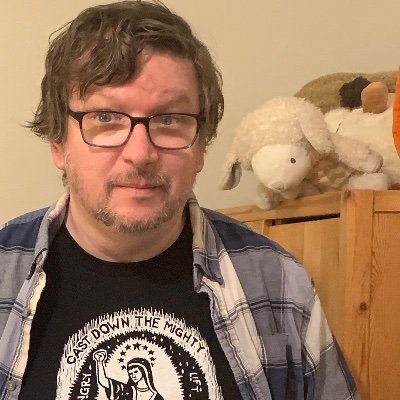
Author2Author: The Goldberg Brothers
Here’s an Author2Author twist: brothers! Lee Goldberg and Tod Goldberg are actually appearing together tonight at the Santa Monica Barnes & Noble, and to celebrate I’m finally getting it together to run the battery of questions and answers they sent me, oh, months ago. (Really, I am finally getting the hang of writing two blogs, honest I am…)
 Lee: You broke into publishing by writing short stories (which have been collected in your new book Simplify), but would you recommend other writers take the same route? From everything I’ve heard, the short story market is supposedly dead…unless you can live by eating the free issues the literary journals offer witers as payment. (Anyone have a good recipe for Journals Au Gratin?)
Tod: Everyone has their own route, of course, but for me writing short stories before attempting to write my first novel just sort of made sense in an artistic way and in a self aggrandizing way. When I really began to take writing seriously, which is to say after I got out of college and was able to recognize how exceptionally awful the novel I thought I was writing in my last creative writing course at Harvard (and by Harvard, I mean: Cal State Northridge) was—the premise had something to do with a semi-haunted house in Maine, a state I’d never visited, that a (surprise!) college graduate student had volunteered to watch over summer; I never got past page 65, due in no small part to my Kaypro crapping out and the fact that, well, it sucked—short fiction seemed to be the best way for me to hone my skills. It also gave me a strong sense of completion in a fairly short amount of time, which made me feel good.The short story market is far from dead. There are literally thousands of print journals and magazines and many more online as well, and I’d venture to say that all of the folks getting published by them are likely not of the Zombie-variety. You can’t make money, at least not at first, but what you can make is something far more important: a reputation and a publishing history, both of which are quantifiable things in the publishing business. I happen to love short fiction—I love to write it and I love to read it—and when it is done well, I think short fiction is as moving and as important as a novel can be; take Dan Chaon or Mary Yukari Waters, for instance, and you’ll find in 5,000 words what often takes other writers 75,000 to achieve.
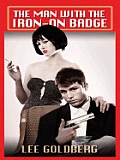
Lee, in the last two years you’ve written, what, nine books?—several of which are based on long running TV shows (Diagnosis Murder & Monk). Your latest novel, however, The Man With The Iron-On Badge, is a stand alone mystery. Is it easier to write a stand alone, where you have to establish that character and back story from page one, or do you prefer working with established franchises? In between all that, you and your writing partner also wrote a book on screenwriting—how difficult is it for you to be constantly changing speeds?
Lee: For the last twenty years (My God, am I actually old enough to start a sentence with that?), I have made my living as a TV writer/producer. I spent most of that time—okay, all of it—working on shows that other people created. That’s true of most TV writers. You are hired, for the most part, for your ability to articulate someone else’s vision and, at the same time, bring your own unique voice to the writing. So I am quite comfortable writing about characters and worlds created by others. I look at my tie-in novels as the publishing equivalent of working on an episodic television series.
That said, I wasn’t just a writer on Diagnosis Murder, I was one of the executive producers. Basically, the show was mine. Although I was given the characters, and the world they lived in, I was free to make whatever changes I wanted. They were mine to shape and, as a result, inevitably reflected my own creative choices. Writing about them became no different than writing characters I created myself. And now, as I write the Diagnosis Murder novels, the characters feel very much like my own creation because they have been under my stewardship for so long. I have been living with them, and writing about them, on TV and in print for a decade now.
Monk is different. I’m a freelance writer on the show, contributing individual episodes and working hand-in-hand with the creator/exec producer Andy Breckman. That relationship extends to the books as well, though he has given me the freedom to make the character my own. Andy recognizes that books are different than television and that I need to dig a little deeper than a 44-minute teleplay allows. My Monk is recognizeable as the TV character but, in some ways, he’s my own Monk. For one thing, the books are all told first-person from the perspective of Natalie, his assistant, which is bound to give the stories a different feeling than the TV episodes.
The great thing about writing an original novel, not based on any pre-existing characters, is that I am not inheriting anyone else’s choices (good or bad). I’m not stuck with character traits or backgrounds or situations that I don’t like. Obviously, I get more personal satisfaction out of writing an original novel as opposed to a tie-in. But when it comes to the actual writing, the sitting down at the keyboard and telling a story, there is no difference at all. I’m equally invested in the work, personally and creatively, whether it’s a tie-in or an original.
The Man With The Iron-On Badge allowed me to not only write about a character that was close to me, but to also examine the detective genre I’ve been toiling in for so long. The hero is a guy who learned everything he knows about detecting from watching TV and reading books. He’s a human tie-in, so-to-speak, a man who has derived his character from other characters in search of a character of his own (could I possibly have used “character” more in one sentence?). My other original novels, I realize now, also share a similar thematic link—My Gun Has Bullets, Beyond the Beyond, and The Walk also have characters who are influenced by a lifetime of watching, and absorbing, TV clichés.
One of the great things about writing original novels, TV shows, tie-ins and non-fiction books is that the variety and diversity of the challenges keeps me fresh. I don’t fall into a rut. I like to think that makes me a Writer— as opposed to a TV Writer, or a Mystery Writer or a Tie-In writer.
How do you begin thinking about a novel? Does it start with a character? An image? A situation? A scene? And at what point do you make the decision to commit to writing it or toss it aside and start thinking of something else? Which do you prefer writing…short stories or novels? For you, creatively, what are the pluses and minuses of each?
Tod: All of my stories—be they novels, or short fiction, or, to some extent, even my nonfiction—begin with a character. I’m a fairly vain man, as you know, and since I primarily write in first person, the character invariably has to be someone I’d like to spend time with or someone I wish I was. That doesn’t mean they have to be nice, or moral, or even attractive, but at some level they should be compelling to me and should have enough going on internally and externally to keep me interested for the year or two I’ll spend writing the novel or for the month I’ll spend writing the story.
What’s weird, however, is that if you look at my books, you can kind of see the issues I was going through personified in the characters. When I was writing Fake Liar Cheat, I was a dumb punk who thought literary fame was on his doorstep and Richard Ford, Paul Auster, John Irving and, hell, Fanny Flagg just for good measure, should just get the hell out of the way and clear some shelf space, dammit. When I was writing Living Dead Girl, I was older, recently married, and confronting the ostensible REST OF MY LIFE. And the short stories in Simplify run the gamut over such a long period of time, nearly 10 years, that my evolution as a writer and as a person start to become clear. Though, uh, upon re-reading those stories, I apparently have dad issues…
On a purely artistic level, I prefer to write short stories. It’s an intense and driven process for me and I like that in a month, I’m usually done with it, have rewritten it and am already prepared to have someone pay me next to nothing for it. A novel, on the other hand, is a living thing. What I write on page one and what I write on page 200 may be separated by a year or more in time and I often find myself overwhelmed by that sense. But there’s no better feeling than printing out that final copy and typing A Novel By Tod Goldberg across the cover page.
How is it that we both grew up in the same house and yet we both write such dramatically different things? People always ask me if I see similarities in our work, but I rarely do, other than that we are prodigious killers of fictional people and that we’ve both set novels in the same exact place (Loon Lake, WA). Why do you think we write such different kinds of books?
 Lee: I’m still trying to figure out the Loon Lake thing. It’s like our family’s collective unconscious (our uncle also set part of his novel at Loon Lake). You don’t know this, but I also have fifty pages of a torrid, James M. Cain-esque novel set at Loon Lake that I started writing three or four years ago and never finished. Before I gave up on it, I scrawled the key plot points on a napkin in case I ever wanted to get back to it. It was as if I knew I was going to abandon it even before I did. Well, I didn’t entirely abandon it. I think about it ever few months and I lifted a paragraph or two from it for The Man With the Iron-On Badge, so those fifty pages weren’t a complete waste.
But to answer your question, we write different books because we are different people. Given a choice between reading a literary novel or a thriller, I’ll choose the thriller most of the time. You’ll choose the literary fiction. That’s not to say I don’t read non-crime/non-genre novels…I do. We share some of the same favorite authors. But I love thrillers, mysteries, and westerns—basically, escapist fiction—with a passion that you clearly do not.
Maybe it has to do with TV. I was a voracious reader as a kid, but I also grew up watching a lot more TV than you did and developing a true love of the four-act structure. Maybe watching all that TV shaped what I expect from a story…a kind of narrative engine, conflict, and personal stakes that aren’t always found in literary fiction. Or I’m just superficial.
The only similarity I see in our work is our sense of humor. We have different writing styles but even so I still see the same approach to humor, the way we present a joke or create a funny situation (whether in dialogue or prose).
17 November 2005 | author2author |
 Our Endless and Proper Work is my new book with Belt Publishing about starting (and sticking to) a productive writing practice.