
August 12, 2005
Author2Author: Adrienne Brodeur &
Amanda Filipacchi, pt. 4
Thanks again to Adrienne and Amanda for joining us this week. Be sure to come back next week, when Author2Author takes on Nancy Drew as Susan Kandel and Chelsea Cain settle in for a week-long conversation.
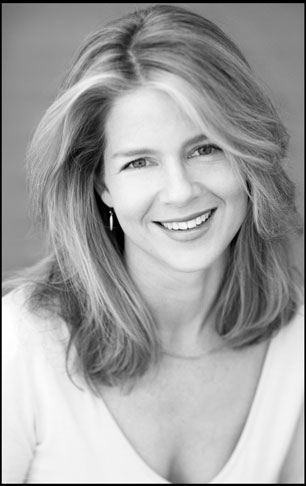 Adrienne Brodeur: When I first read Love Creeps' flap copy, I had my doubts that I could get lost in the fictional universe of a "triangle of stalkers." It seemed as if it might be contrived or too much of a fictional leap for me to make, but I was happily hooked within a very few pages and never looked back. This makes me wonder which came first: the chicken (in this case, the characters) or the egg (the concept). When you started writing, did you have eccentric, stalking characters in search of a plot? Or did you have a concept (stalking and obsession) and develop characters to explore it?
Amanda Filipacchi: All three of my novels deal with obsessive love in one form or another, so that's a theme I keep coming back to. But at the same time I always try to create characters and plots that strike me as completely original, completely new, the kinds of people and situations I've never seen before in books or movies. In the case of Love Creeps, the idea of a stalking triangle really intrigued me and I thought I could write a novel that would tackle the topic in an original and entertaining way. I hope I've succeeded. And I hope the flap copy doesn't put people off! I know that probably most readers are interested in topics or characters they can identify with, but even I sometimes don't identify with my characters--at least at first.
I've noticed that my life frequently imitates my writing. After working on a novel and on characters for a long time, and thinking about them a lot, I begin to understand the characters better and even to identify with them more than I did at first. I become influenced by them, to a certain extent. Sometimes I even start experiencing what they experience. For example, in Love Creeps I wrote about a woman who lost her desire for everything in life. I had never experienced such a thing, never knew anyone who had, and didn't even really believe that such a thing was entirely possible. I was simply interested in the concept. After a couple of years of working on that book, I started experiencing that very problem. It's actually a symptom of depression, and I'd always tended to be a bit prone to depression, but never with that particular symptom. It's as though that character's problem rubbed off on me. By putting myself in her shoes and trying to imagine what it must feel like to lose one's desire, I eventually grasped that knowledge all too well.
That experience and others like it has led me to conclude that I should perhaps be careful what I write about. I decided that for my next novel I should try writing about happy people in fortunate circumstances. It's a challenging enterprise, because most stories are based on conflicts and problems and negative elements that need to be overcome. I asked the film director, Neil LaBute--who wrote the screenplay adaptation of my second novel, Vapor, and is meant to direct it--what he thought of my idea of only writing about happy characters in good circumstances, telling him I thought it might have a positive influence on my life and happiness. I asked him whether he'd ever consider doing such a thing, and he said something like, "God no." That's not surprising when you think about the wonderfully grim and twisted stories and characters he concocts. And maybe his writing doesn't affect his life as much as mine does. So I embarked on this project of writing a novel with a joyful plot and happy characters, and I'm very pleased with the novel so far, very excited about it--though of course I've failed completely in making my characters happy and limiting their lives to fortunate events. The other day I was flying back from L.A., refining the story in my head, and part of the plot toward the end is so sad it was making me cry on the plane. So I guess that's proof enough I've failed to keep the book 100% joyful, but hopefully not in creating a successful novel.
August 11, 2005
Author2Author: Amanda Filipacchi &
Adrienne Brodeur, pt. 3
Amanda Filipacchi: I was very impressed with the amount of research that seems to have gone into Man Camp. Did you already know about all these topics, such as economics, the mating rituals of birds, and what it's like to work on a dairy farm? Or did you have friends who knew about these things, which gave you the idea to write about them? Or did you first decide on the subjects and then seek out experts?
Adrienne Brodeur: I am as familiar as the next writer with the age-old adage: "Write about what you know." In fact, that saying banged around my head quite a bit as I tried to figure out where to set the book's actual "man camp," the location where the urban men would be sent to reconnect with their masculine instincts. Was I crazy to think that I should try to place it somewhere as foreign to me as a dairy farm in West Virginia? Or should I try to find more familiar surroundings, say a fishing boat on Cape Cod, where I might be able to accomplish my goal while "writing about what I know?" In fact, I was so unsure about where to send the campers, the book came to a screaming halt for several weeks (or was it months?) after the New York section was completed. Not writers' block per se, rather fear of the unknown. Still, I had a hunch about farm life ...
So, to answer your question, I researched the topic extensively by visiting a friend's dairy farm in West Virginia. I stayed for about a week and immersed myself in farming life--got up early, milked cows, drove tractors, spread manure, fed calves, even inseminated a couple of unflappable heifers. Right away, I knew my instincts about locating man camp on a farm had been correct. Perhaps it was because I already knew what I wanted to accomplish there (that the city men, expected to fail in the face of true masculine activities, would thrive, and that the women would fall short), but it turned out that the sexual stereotypes prevalent on a farm worked seamlessly with the ones I was making fun of in the book--everything from the language of bovine reproduction (a cow is "freshened" when she has a calf) to the fact that only one bull is required to service the reproductive needs of an entire herd--played right into my themes.
The biggest shock, however, was comparatively how much more quickly I wrote the second half of the book, the part set in West Virginia. It flew! Perhaps it was as simple as having the end in sight (the way a horse speeds up on his way back to the stable), but I think it also had to do with the thrill of writing what was unfamiliar to me. In some unexpected ways, research made my writing livelier, because I couldn't take for granted knowing something. For instance, I could write a description of the back of a taxi without ever leaving my apartment. Not so with a tractor. For that, I needed the fresh experience of riding one, where I could pay attention to all of the rumbles and bumps and smells.
(As for the rest of your question, I'm embarrassed to admit that not much research was needed: I'm a science geek at heart. When I'm not lost in a novel, I love to read about why ducks' feathers repel water or how one gene can change a prairie vole from being a promiscuous philanderer into a monogamous mate and attentive father. Fascinating!)
August 10, 2005
Author2Author: Adrienne Brodeur &
Amanda Filipacchi, pt. 2
Adrienne Brodeur: As a writer with a great deal more experience than I have--you've been writing since you were a teenager, have an MFA, and have published three novels--can you tell me a bit about how your process/method has changed (or not) as you've matured? Are you disciplined and methodical, getting up every morning with the sun and staying at your desk until 3 p.m.? Or do you write in bursts as the muse speaks to you? Has your approach to each novel been similar?
Amanda Filipacchi: I'm always trying to make myself write more, better and faster. But I'm still perfecting my ways of doing that! I'm constantly creating and testing different methods of discipline, different writing schedules, and then writing reports on each method, detailing how each one failed, its pros and cons, and any side effects, such as depression, sleepiness, etc. Maybe one day I should publish a self-help book for writers on all the writing methods I've invented that might work better for others than they did for me. For example, one method consists of only allowing myself to eat chocolate while I write. That method works pretty well, but not well enough, obviously. One well-known writer only allowed himself to turn on the heat in his freezing house while he was writing, which encouraged him to write a lot. I was at Yaddo one summer, working on Vapor, and I was going through a phase of having a whole elaborate setup for when I wrote. I would have a green light, and would burn oils (usually something pleasant like grapefruit or orange or lemon), and I'd place an electric fan behind the oils, and it would blow the scent of the oil in my face while I wrote. And the room would be dark except for the green light, and music would be playing. I showed a fellow writer my setup and told him not to tell anyone, and then the next morning the other writers at Yaddo were asking me to show them my setup.
Then there's the question of how I approach the actual writing of each novel. Recently, readers have been e-mailing me through my website, asking, "Why does it take you six years to write a book? Are we going to have to wait another six years before the next one?" Part of the reason it takes me so long to write each book is I'm very thorough. I make lists of every possibility for every aspect of the novel, including plot, characters, scenes, settings, motivations, character traits--everything. And when I come up with an idea I like, I don't settle on it immediately, I keep on thinking of every other possibility to make absolutely sure there isn't one that's even better. When there is, it's like discovering a treasure. I usually have hundreds of pages of notes before I even begin the actual writing of each novel.
August 09, 2005
Author2Author: Amanda Filipacchi &
Adrienne Brodeur, pt. 1
I met Amanda Filipacchi at her book party a few months ago, and soon thereafter she expressed her enthusiasm for the Author2Author features here and wanted to know if she could do one. Sure, I said, so she lined up her friend and fellow novelist, Adrienne Brodeur (whose name Poets & Writers fans will recognize from an article on what happens when editors write), and they set about querying each other about their novels: Love Creeps for Amanda, Man Camp for Adrienne.
Amanda Filipacchi: I found Man Camp a lot of fun to read, which you may find surprising when you hear I'm someone who gets pissed when my mother asks my brother to sit at the head of the table because he's a man, or asks me to do the dishes and asks him to do nothing except occasionally take down the trash or other manly activities. I can't stand those stereotypical gender roles and I can tell you they've caused many fights in our family. Even at other people's houses, or at dinner parties, the sight of all the women bustling about, clearing the table, while the men just sit there and talk fills me with a kind of sad nausea. In your book, I found it very interesting to see how you explore the opposite point of view. Your female protagonists want men to be more manly (though I couldn't help noticing with glee that in one scene these women do get irritated when the men don't help clear the table). You describe that point of view very persuasively and I found myself able to see the appeal of a manly man (albeit only for brief instants, because it goes against my nature). When you wrote this novel, did you wonder whether you might be taking a possibly unpopular stance on this subject, and if yes, did that worry you?
But anyone who really reads Man Camp, I hope will recognize the fun I poke at all gender stereotypes. The title of this book is meant to be outrageous. Hell, the concept, if taken seriously, is downright offensive. But therein lies the twist: it is the urban men, initially ridiculed for their lack of skill in the area of manly arts, who end up thriving at Man Camp, the dairy farm where they are sent to go through masculinity boot camp. And it is Lucy and Martha, two completely competent New York women, who struggle and fail when expected to adopt more traditional gender roles. Moreover, Cooper, the man who the women initially idolize as the perfect male and who is the main "counselor" at Man Camp, is discovered to have chinks in his macho armor. Precisely, it is his brand of conventional machismo (doing things the way they've always been done, not discussing problems or feelings, etc) that seems to be undercutting both his financial and romantic success. In the end, the New York men with their new culture of masculinity are the ones who save the day.
Obviously, Man Camp takes a rather light-hearted look at the subject of gender roles, making its points through humor, and while I don't feel defensive about it, I've been surprised by the reaction that somehow I must be an advocate for days gone by. Hardly! Man Camp sets out to tease women every bit as much as men about the seemingly ubiquitous desire to have it all in a mate, when ironically, if there is one truth about love, it is that it requires compromise on everyone's part. And while I'm sure this is unnecessary to state, like all women of our generation, I owe a huge debt to the feminist movement. Over the course of my professional career, I've had the opportunity to be chief of staff in a political office, to found and run an award-winning fiction magazine (Zoetrope: All-Story), and now, to write and publish a novel.