The Beatrice Interview: Deborah Eisenberg (1997)
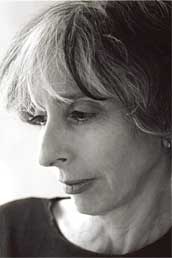
Although she’s an acclaimed short fiction writer, and has been teaching writing at the University of Virginia for several years, Deborah Eisenberg is often reluctant to talk about her craft. “I’m supposed to be able to talk about this stuff, but I actually can’t,” she tells me over tea at San Francisco’s Clift Hotel. “I find that I have some incredible resistance to understanding what I do so that it can be communicated in a theoretical way.” Despite her protestations, Eisenberg proves to be quite eloquent in describing how she creates her sharply detailed and darkly humorous stories.
I was interested by an idea that popped up in an interview you did with Francine Prose, the idea of a “reverse epiphany” in short stories, the rejection of that cliched moment near the end of a story where everything falls into place in the protagonist’s head.
I have to admit that I have no idea what the word “epiphany” means. It’s been explained to me many times, and there’s
something about the idea of it that I simply reject. It seems like a word you’d use to describe something that is only real in the most vague way possible. As such, it’s something that almost can’t happen in writing. Of course it does occur marvelously and beautifully in many pieces of writing, but it really is so complex and subtle that I can never quite identify it as a thing you’d call “epiphany.”
My favorite moments in these stories are those in which epiphanies would stereotypically occur, but your characters simply go on experiencing what they’ve been experiencing, doing what they’ve been doing, just the way we would in real life.
That’s the issue as far as I’m concerned. What is an experience? What does it actually feel like? What is the consistency of that moment in the mind? What is actually occurring? What does it actually feel like? Not, how will I sum it up to myself, or how will I sum it up to the reader, but what is going in my nerve endings? What’s going on in this strange, sloshing organ that’s encased in my skull?
In order to convey that, you avoid using an authorial voice that ‘explains’ a character’s thoughts or actions from outside. You stay as close to the characters and their reactions as possible.
To me, in a way the implicit task is always, “What does it feel like to be a human being?” Whoever the character is, how far
can I crawl into the mental processes of that character? It’s very rare that one says to oneself, “This is what’s happening, this is what this moment is. It means blah-blah…” That’s just not the experience of being alive, the experience of a moment.
That seems especially true of the way children would experience the world, and your protagonists are often children. There’s a scene in “Mermaids” in which Kyla, the protagonist, doesn’t have time to think, “This is weird and vaguely sexual.” It simply is…
…Although I never think of myself as writing about children. I don’t have children, I don’t understand them, I don’t remember my childhood… Often adults have learned to protect themselves by monitoring their experience and calling it by names to alleviate a certain amount of the anxiety of living. One learns to say to oneself, “Yes, this is a moment that’s vaguely sexual. It’s weird. Oh, I get it. I can deal with that.” It’s just a thin veneer over the life that we’re leading, a way of controlling the almost unbearable influx of information pouring into us at all times.
What starts a short story for you?
There are a few things that might kick something off, like an image or a phrase. Sometimes there’s a kind of tonality that I
want, almost as if I was writing a piece of music. Unfortunately, I’m not at all musical and could never even dream of that, but sometimes in the back of my mind there’s…you could almost describe it as a musical model, really. I think that was particularly true of my first book [Transactions In A Foreign Currency], something that I was concentrating on without being particularly conscious of it.
You know how sometimes there’s just a certain slant of sunlight, the fragrance of a certain flower, and a whole world will open up in your head? You think, “What is that?” That’s what I go for, an exploration of the signals that make you feel that way.
It’s a very meticulous process for you.
I wish I were faster, and more fluent, that I knew much sooner what I was going for. I wish I were more efficient in every way. I’m just not, and I can’t seem to do anything about it. It just takes many months of scrabbling around in swampy territory to figure out what it is that I want. There’s always a point at which I think I have a final draft, then I read it and ask myself, “Why have I written this?” Then I go back and write it again and that’s the final draft.
Is that meticulousness part of the reason you haven’t written much in other areas besides fiction?
It takes me as long to write anything as it does to write anything else. In nonfiction, you more or less know what the task is. Of course, you always have to confront that huge discrepancy between your understanding of what the task is and your ability to achieve it. I find that kind of disheartening, to know what the goal is and never quite realize it.
In fiction, the goal changes as you’re working. It’s very elastic, and I think your shortcomings and incapacities are your friends in fiction. They teach you both what you can’t do and what you can do. If you can’t do such-and-such a thing you’re trying to do, you find yourself pushed into doing something you can do which you didn’t even recognize as a possibility.
The short story form seems well suited to dealing with limitations, whereas a novel requires a structure and
resolution.
That’s true, and that’s why novels are a little less interesting to me. Of course, any good piece of writing is tremendously inventive and deals with the world in a completely idiosyncratic way. If you actually look at any good novel, it’s really quite surprising what’s going on. But there is something else that I can’t quite put my finger on about the demands of doing something long, something that looks just slightly more conventional, I think…
I’ve talked to several writers who write in both long and short formats, and many say that if they had a choice, they would write short stories all the time, but the pressures from the publishing industry to write novels are tremendous.
No question about it, there’s a lot of pressure. I’m very lucky that my publisher and my agent don’t tell me to cough up that novel. But with that good fortune comes a knowledge that you’re never really going to be taken very seriously unless you write a novel. I’m so perverse that I actually find the prospect interesting. Could I get the same depth, could I play as much with different tonalities, by sustaining a storyline at that length? I think that it might be kind of fun, and then I think that it’s exactly what “they” want me to do.
You don’t want to write “Deborah Eisenberg’s breakthrough work.”
It’s just too irritating, too annoying. Part of the pleasures of writing is that it’s the “bad kid” activity par excellence. Why should you give that up?
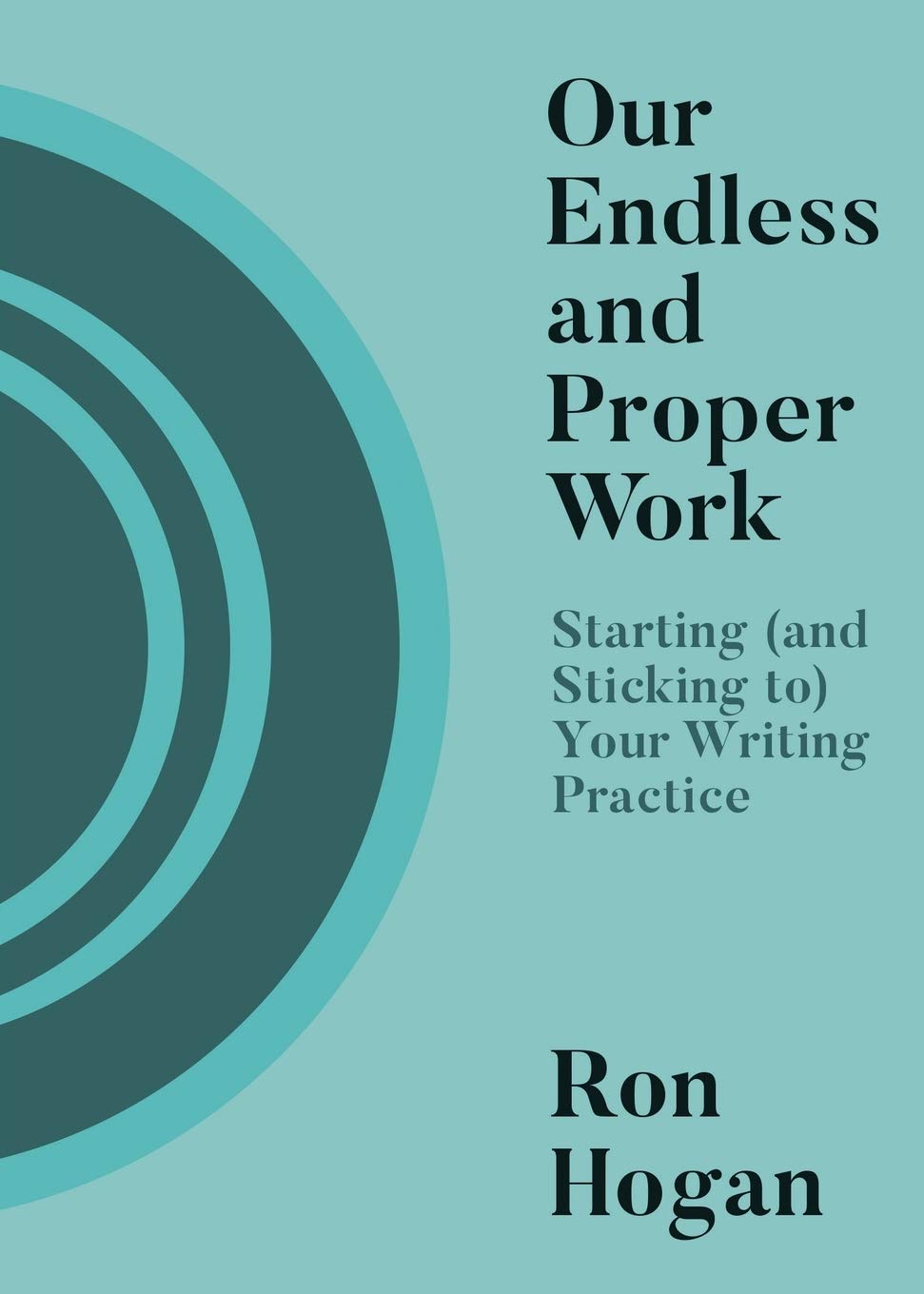 Our Endless and Proper Work is my new book with Belt Publishing about starting (and sticking to) a productive writing practice.