The Beatrice Interview: Helen Ellis (2001)
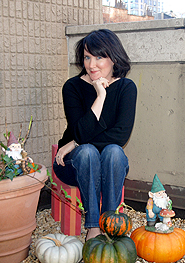
During her senior year of college in Tuscaloosa, Alabama, Helen Ellis was wracking her brain trying to come up with a subject for the short story she had to write as her thesis. Finally her mother suggested that she write about the unusual friends she had growing up. Years later, when she decided to expand that story into a novel, Ellis knew one of the protagonists would be a homecoming queen, but she wanted to make the character distinctive. “I’d had a girlfriend who was an overacheiver, who’s now a doctor, and she’d had those crooked fingers, which are a normal recessive trait like attached earlobes,” Ellis explains, then shrieks when I hold my fingers up in the air. She continues, “Her mother had taken her to the doctor because she wanted to have them broken and reset. They were the one thing that wasn’t perfect. And my other friend was the doctor’s daughter. He came home and told her about it, and said that he would never do it, that it was just barbaric. So she never had them fixed, but I thought, well what if her mother wouldn’t take no for an answer?”
The result is Eating the Cheshire Cat, a hilarious novel that follows the high school and college lives of homecoming queen Sarina and Nicole, the obsessed classmate in the house across the street…and Bitty Jack, the outcast girl who still remembers Sarina’s cruelty as an adolescent. (And that doesn’t even begin to get at the myriad connections and tensions between all the characters in the novel.) Think of a morbidly funny, slightly (but not predominantly) queer version of Endless Love set in the deep South, and you’ve got a hint at what Ellis has in store for you.
Are there any aspects of the novel that are autobiographical?
 I think each of the three characters is very much a part of me. Obviously there’s Bitty Jack—as a preteen, I was very much as she was described: awful skin, not neat, nervous just crossing the room. I wrote a book [about her] I wanted to read, a story about an ugly duckling that stayed an ugly duckling, but it’s still a happy ending. Not every ugly duckling becomes a beautiful swan, but they can be successful and happy.
Sarina wants control over her life and everyone in it, just as I want control as a writer. If the towels are peach, it’s because I say they’re peach. If the situation doesn’t work out well, I’ll just delete it and start over again. I sometimes like to take the same approach to my real life, but as you get older, you realize you have no control over anyone else, and barely any over your own. And that’s what Sarina discovers as she keeps getting shut down. And Nicole is who I know I would become if I didn’t bathe for two weeks and let every instinct that I have come out, if I didn’t put a leash on myself. It was very hard for me to finally let her go nuts, because I understood her so well. So they’re all me. Not the me I’d let out at parties, but all me.
If Bitty Jack’s story is a wish fulfillment of sorts for you, it’s a very dark one, wouldn’t you say?
Yeah! I think people are surprised by the ending, but I think it’s a happy ending. There’s no white knight that comes in and saves the day. She saves her own day. I was just so sick of reading stories and seeing films where everything was okay as long as the girl got back together with her boyfriend. A lot of readers have asked why she doesn’t go back with Stuart. He’s sorry for what he did, they argue, he really is regretful. But she’s going to be okay. She’s 21 years old, and there will be other boyfriends, other adventures.
There are definitely points where it looks like you had fun pulling all the stops out.
I’m a big reader, a huge reader, and I like a book to hook me. Now there are different ways to hook, but I want a book to grab me and tell me its story. You know how it is in the South—the whole family are storytellers, so you have to come up with something to top everyone else’s story, and sometimes you just have to exaggerate.
This is a very Southern Gothic story, wildly funny but also horrific in spots.
I was down in Jackson, Mississippi, where my mother has a lot of relatives, and they all came out of the woodwork for the reading. They asked me if my mother had told me about her friend in elementary school, and I said no, and they said, “Oh, we thought that’s where you got the part about the beheading in the car wreck.” So they told me about this boy my mom knew who was sitting in the back seat of his parents’ car, driving home on a foggy night, and a log truck was stalled on the highway. They drove right into it, both their heads came off and rolled into the back seat, and he woke up with his parent’s head. And then they told me story after story just like it.
How about your portrayal of the sorority culture at Southern colleges?
That’s on the money. That’s very true. What’s been surprising is how many sorority girls like the book. I thought there’d be a huge backlash, but I guess the Tri-Deltas think that I feel their pain.
Who are some of your favorite authors?
I just loved Amy and Isabelle by Elizabeth Strout. It’s her first novel, and it’s just outstanding. I read it and thought, “That’s the kind of book I want to write.” I was in awe. Stephen Dobyns’ The Church of Dead Girls just blew me away. It’s the scariest book I ever read, so well-written, so compelling. It made me sit up in my bed, I was so scared. And I’ve read all of Stephen King. His new book, On Writing, is the best book I’ve ever read about writing. It was so close to my mentality, the way I work. It’s a mentality that’s pushed down in college and graduate school, thinking about writing as a business, or better yet as a job. Ninety percent of getting a book written is sitting your butt down at the keyboard. It’s not about waiting for inspiration, because it’s not coming.
You’re lucky, in that most writers have to try to find time to write around a full workload, but you…
Luck had nothing to do with it. When I was in graduate school, I was temping the whole time, a forty-hour week in addition to my classes. When I got to Chanel, I knew I could do the work, so when I was offered the job, I asked for what I wanted, which was to work four days a week, nine hours a day. So it’s a full-time job, but I have those three days to work.
It was the first time I didn’t hide my writing. All the jobs I’d had before, I never told anybody. I had one long-term job at a financial magazine, and when I left to go to graduate school, that was the first that anybody knew that I had any desire to write. The Chanel job was the first time in my life that I made everything revolve around the writing. And on those other three days, I work from 7:30 in the morning to noon. So I don’t stay out late at night, or if I do, I just show up to write anyway. If you want to get a book done, you have to carve out your time and be dedicated to it.
You have to want it more than anything, and that’s what I’ve been dealing with over the last year, since the hardback came out. I got what I’d always wanted, I’d been running this race for years and years, and when I crossed the finish line, I thought, “Now what?” So this last year I’ve been doing more socially, knowing that it’s okay to take a week off. I know I can write one, so I know I can write a second one.
What was the reaction around the office when they finally found out what you’d been doing on that extra day off?
For two years, every Monday one of my two bosses would ask how the writing went and I’d say, “Fine.” Everybody was a bit surprised when it came out; I don’t think they knew I was really doing it. Every secretary has something else they want to do, so they were surprised when I actually did it. And they’re probably a bit surprised that I’m still there (laughs), but I say if it ain’t broke, don’t fix it.
For the longest time, I was sort of a ghost. I work at the highest level, and very few people get to that office. So if I’m wandering around in the halls, very few people actually know who I am. My boss jokes that when I have two books out, I can drop down to three days a week, three books two days a week, so when I have five books published I can quit. And I’m sticking to that. (laughs)
Do you really see yourself writing full-time somewhere down the line?
That’s the ideal goal, but I have no need for it now, and I still work well on my current schedule. And I work very well under pressure. Yesterday at the office, I was thinking to myself, “Tomorrow I get to write,” and on Sunday, I’ll be thinking, “I have to finish this because I have to go back to work tomorrow.”
It’d be great to get up every morning to write, have lunch, and then watch Oprah, but this is New York City, and even when you get a six-figure advance, it’s hard to make that last. Your agent gets some, half of it goes to taxes… It’s not like winning the lottery. Even when Oprah picks your book, you don’t get all that money upfront.
Keeping the job lets me enjoy the fruits of my labor. I can take two weeks off to go to a writer’s colony, or a month off for a book tour like I did last year, and to have a steady income that my writing supplements. I never believed in being a starving artist.
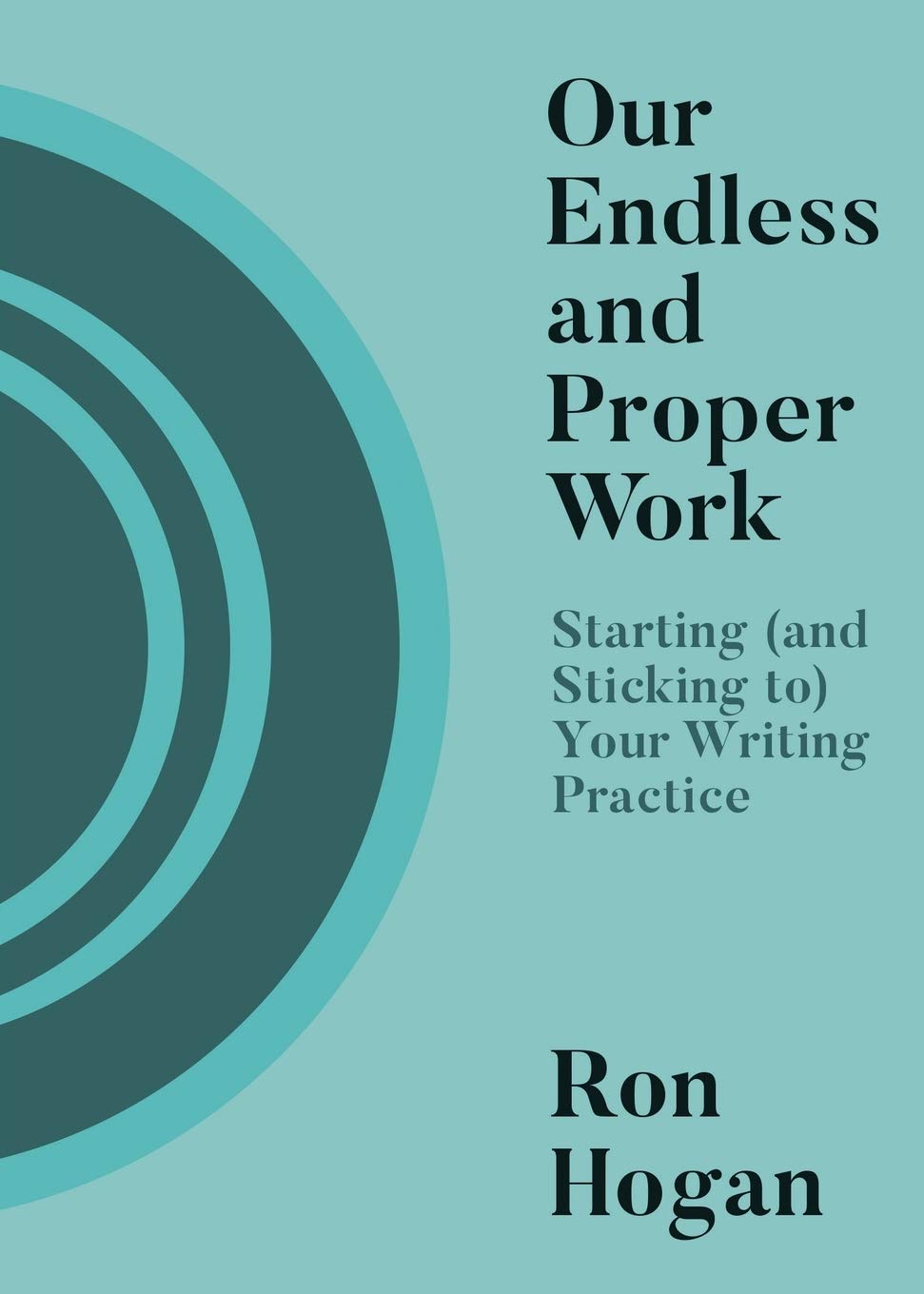 Our Endless and Proper Work is my new book with Belt Publishing about starting (and sticking to) a productive writing practice.