The Beatrice Interview: Carol Goodman (2002)
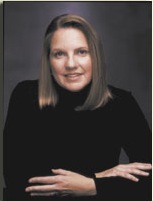
Carol Goodman’s debut novel, The Lake of Dead Languages, stars Jane Hudson, a Latin teacher at Heart Lake, a semi-isolated girls’ school in the Adirondacks. While Goodman has taught Latin, her career was absolutely nothing like Jane’s, she assured me as we chatted in her publicist’s office. “But I think teenagers are pretty much the same anywhere,” she continued. “Everyone I’ve spoken to who’s read the book and been to a girl’s school thinks the atmosphere reads true to them. Somebody told me that I’d gotten the cliques right, and I thought, well, sure, we had cliques when I was in high school, and where I taught.” The novel is a modern Gothic thriller in which Jane is thrust into the center of an unfolding series of tragedies that mirror her own traumatic experiences as a student at Heart Lake twenty years before. Be forewarned: in discussing how she wrote the book, I’ve asked some questions that give away one of the crucial elements of the mystery!

RH: Why did you choose Latin as your college major?
CG: I think I was just being quirky and ornery. Everyone seemed to be majoring in English, and I wanted to be different… I also wanted to understand more about the origins of language. I started taking Latin for that reason. At first I thought I’d spend a few years on Latin, then move up to Middle English, and finally end up in English, but I never did get past Latin and Greek. I loved it, especially the poetry, and when I came back to modern English literature, I felt like my understanding of it was enriched.
RH: So you were interested in literature and creative writing back then?
CG: I’ve been writing since I was nine. I wrote a lot of tortured teenage poetry, and when I was seventeen I was named Young Poet of Long Island, which is still my favorite literary coup. (smiles) The four years I was in college were actually a break from writing; I started writing short stories pretty soon after I graduated.
RH: When you started writing The Lake of Dead Languages, did you feel as if you were ready to start a novel, or was it a story that just kept expanding as you worked on it?
CG: I’d written two novels that have never seen the light of day and probably never will. I went back to writing short stories. I was in the MFA program at the New School and didn’t want to work on a novel there because I thought it would be too difficult to workshop a novel. After I got out of the program, one of the stories I’d written, about a Latin teacher at a girls’ school, stuck in my mind. It wasn’t at all like the novel turned out to be; there was no mystery, it wasn’t set on a lake. But one of my teachers at the New School told me that I should do more with the setting, and I finally decided to try a novel again.
The first book I’d written was a young adult fantasy novel. The second was a more conventional mystery. I like mysteries; I like reading them, though I usually end up gravitating towards quirky books that are on the edge between mystery and mainstream fiction. So when I started writing The Lake of Dead Languages, I felt like I could give myself permission to write a mystery without sticking to the conventional rules of the genre.
RH: How did you decide to create the three-part narrative structure with the huge flashback in the middle?
CG: I knew that there was a story in Jane’s past, but when I started writing, I didn’t know what the full extent of that story was. So at first, as I started learning the first hints of what had happened to Jane when she was a student at Heart Lake, I was less like a writer and more like a reader. I wrote about fifty or sixty pages of the first section of the novel, then I stopped and wrote the entire middle section before going back and finishing the first section. I knew I just had to write that story out at some point before I could resolve her present situation.
In the earlier drafts of the novel, the past is confined to that middle section; in the later drafts, I took some of that material and interpolated it into the final third of the novel. By then I’d found an agent who was willing to support the book, but it was always with the understanding that I’d make revisions, and we decided that you needed the suspense of not knowing everything that had happened in the past, so there would still be revelations in the last third of the book.
I love stories with these kinds of complicated backstories, and though I swore when I was doing the revisions that my next novel would be a lot simpler, I’m using the same structure in the book I’m working on now, so I guess I haven’t learned from my experience. (laughs)
RH: You also had to find a way to make it plausible for Jane not to recognize one of her former classmates until the very end of the story.
CG: I’ve had different people respond to that in different ways. I don’t recognize people from twenty years ago, so it’s credible to me that Jane wouldn’t know who Albie is. To me, it was more of an issue that nobody else would notice. Well, the dean knows, but she never says anything about it to Jane…
RH: That, to me, was the bigger hurdle. It seemed like that information should have slipped out at some earlier point.
CG: Well, she does mention it at one point, and two other teachers mention it, but Jane completely misses the point. It’s a difficult issue—you obviously want your narrator to be an intelligent, perceptive person, but at the same time she can’t be too observant, or there’s no story. What I tried to do is write about the type of character I’m interested in, someone who’s very capable but still has certain failings. Jane doesn’t see things because she doesn’t want to see them, or because she’s worrying about something else. And she never really noticed Albie when they were students at Heart Lake, so she remains somewhat dismissive and unobservant of her. People might criticize that point, but what are you going to do? I tried my best. (smiles)
RH: Who are some of your favorite writers? /p>
CG: My favorite author of all time is Charlotte Bronte, and I love nineteenth-century British literature in general. I also love Dickens; one of the things I had to prune out of this novel were the coincidences, and it still has plenty of them. But I love literature with coincidences, the idea of a world where everyone you’ve ever met will turn out to be an important part of your story. For modern writers, I love Sue Miller and Margaret Atwood. I also like writers who take chances, so I really like Alice Hoffman’s use of magic realism. And in mysteries, I like a lot of noir writers, like Raymond Chandler and Dashiell Hammett, and Ruth Rendell.
RH: You mentioned taking chances, which brings up one of the novel’s more interesting ambiguities. It’s really not clear until the very end whether this is a murder thriller or a supernatural murder thriller. Maybe there
is a curse on the lake…
CG: I didn’t plan to do that too much. I wanted there to be an element of irrationality, but I didn’t want to write a horror story. At the same time, I didn’t want to mislead anybody, so I made sure that there wasn’t anything in the story that isn’t eventually given a rational explanation, even with the eerie atmosphere. I love unexplained mysteries, but I’m not going to write one. I feel as though I’ve got a covenant with the reader, and I can’t get away with not explaining things. I love stories with that kind of ambiguity, even though there’ve been a few I’ve read that I think didn’t quite get it right… I’m sure there are people who won’t be able to stand it.
RH: Well, nobody ever complains about “The Turn of the Screw.”
CG: No, I’ve taught it in college, and people do complain. (laughs)
RH: Is the novel you’re working on now a mystery as well?
CG: It is, but it’s even less obvious in the first third than this novel is about its mystery plot. This novel, Hotel Equinox, also has an extensive part of the story set in the past; in this case, the narrator is trying to find out about her mother, who died when she was twelve. So at first it’s an exploration into what happened to her mother, but there are other mysteries that are attached to that story. So it’s a mystery, but still a very uncovnentional one, brushing up against that mainstream fiction boundary.
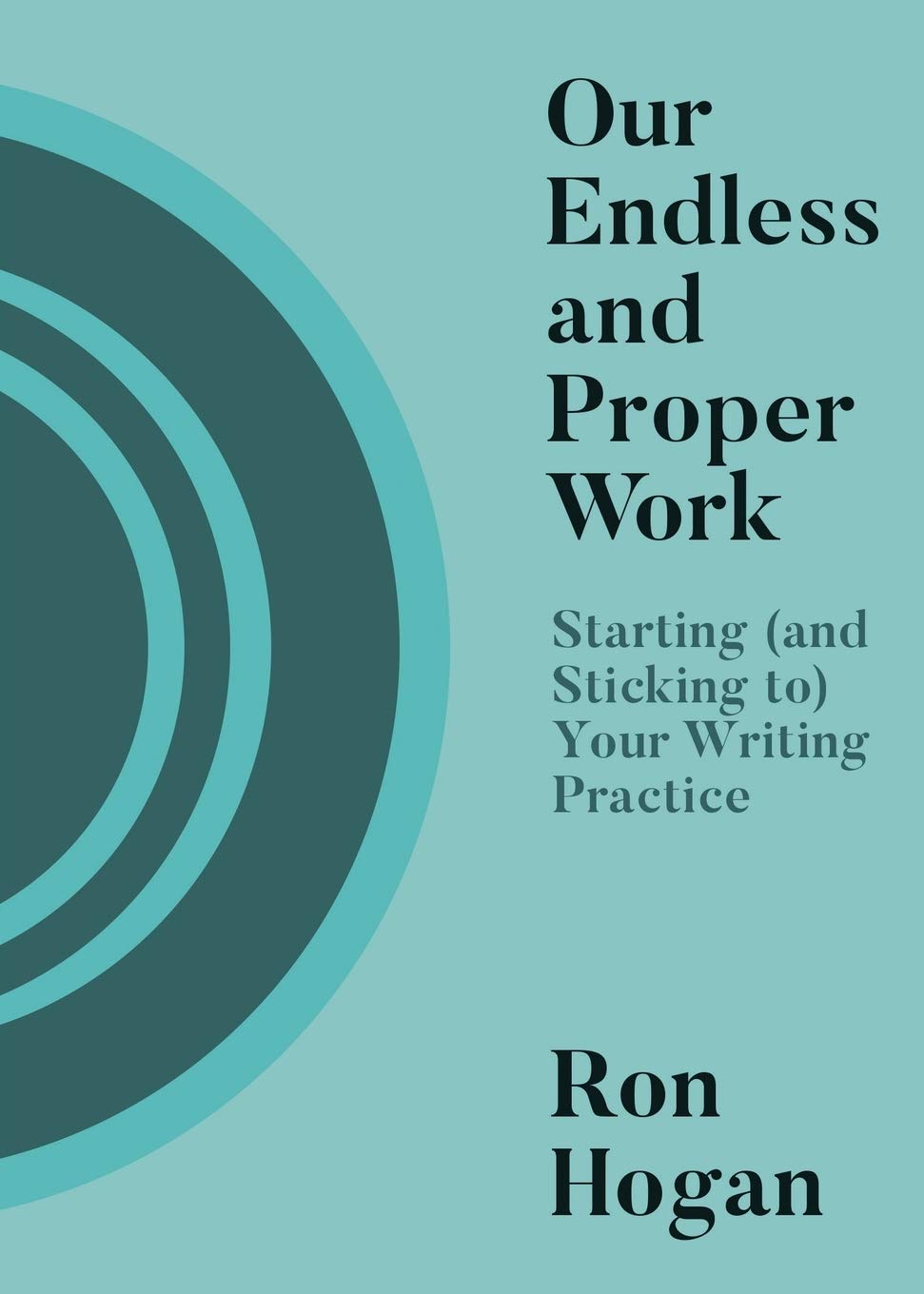 Our Endless and Proper Work is my new book with Belt Publishing about starting (and sticking to) a productive writing practice.