The Beatrice Interview: Allan Gurganus (1997)

Robert Gustafson is the most beautiful boy in New York City in the ’80s, loved by both Hartley Mims, Jr., a struggling young gay writer, and Angelina “Alabama” Byrnes, an equally young and equally struggling painter, who are themselves the best of friends. This trio is the center of Allan Gurganus’ new novel Plays Well With Others. “I very much wanted to write about that complicated love that we have for friends when we’re in our twenties,” Gurganus says, “when everybody is a sexual object in one form or another. Our devotion to these people and our erotic fascination with them gets all blended together and wonderfully confused.” The never-quite-perfect love triangle provides much of the comedy in this touching look back at Manhattan’s gay and creative communities in the years just before AIDS.
Gurganus is probably best known as the author of Oldest Living Confederate Widow Tells All, and while this book may come to a shock to some of the readers of that earlier work (if, as we’ll see, they ever hear about it), the language is just as identifiably Gurganus’. Like the author himself, who shows up for his interview with a bow tie and a pair of Converse All-Stars, Plays Well With Others is charming precisely because of its mixture of elegance and casualness.
Some people might ask why we need another novel about New York in the ’80s, but you’ve said elsewhere that the necessary perspective wasn’t present for you until now.
It always takes me fifteen years to look back at any event in my life and to see a shape, to flatten it, heighten it, and simplify it in the way that fiction requires. I think with the present advances in medicine, it’s possible to look back at those first cases in that very early time, and to see the medieval terror and the concomittant coming together of the community to defend itself. I think it was a weirdly heroic moment and that future generations will see that the response to the AIDS pandemic ranks as one of the great moments in civic history. The fact that so many people in the artistic and the gay community put their heads together and used their skills as artists, writers, and publicists to reverse the early suspicion and terror, to inform themselves and protect their friends, is an immense and beautfiul subject. It seems less immediately inspirational, but as medicine has made people live longer and longer, it’s now possible to parenthesize that particular moment and dramatize it.
This had actually started out as an essay, right?
As I say in the context of the novel, I think that finally my address book may be the greatest book I ever write, the greatest book I ever assemble, and the truest testament to my achievement in life as a gatherer of wonderful friends. It was in the process of purging the dead from my address book, or considering getting rid of them, that I began to understand yet again the scale of what had been lost. I had to come up with an alternative filing system so that I didn’t just jettison people who had the bad taste to die young, but somehow kept them on record, kept them in places of honor. And as I wrote about this in an essay, I realized that while it was good in and of itself, it needed characters. It needed amplification. So I invented Robert Gustafson as an emblem of all those kids that I remember as being talented and gorgeous and highly visible and full of promise. Then it began to be a novel. You never really know where the work is coming from, and to be really responsive you just have to follow it like a dowsing rod wherever it will lead you.
In an interview with Donald Antrim that appeared in BOMB, you had an interesting comment about moral responsitivity, which is that if you think about being morally responsive, you aren’t really. I think that holds true for creative responsitivity as well. You have to live in that moment and write what occurs to you.
If you trust the work and give it a daily place in your existence–and by ‘daily’ I mean that even on a book tour, you’re writing on a yellow legal pad, even though there’s a distinct possibility that none of these sentences will ever see print, just to keep your chops going, just to keep your hand in–you do find that your major ethical and personal concerns come to rest biorhythmically in the fiction. Just as the work becomes essential for you, there’s a possibility that it can become essential for dozens and hundreds and thousands of other readers.
It’s a curious bargain that we make as writers to assume that our emotional lives are synchronous in large part with those of every other member of the species. That’s the great lesson of literature, that it’s predicated on the notion that we are not just similar but unanimous. It’s the only form that I can think of right now that makes that its basic assumption. It’s thrilling to think that I can sit down and read a passage from Montaigne and weep real tears, or be moved by Dante’s vision or Chaucer’s vision. These people have been fog on a coffin lid for four or five hundred years, yet they’ve left their emotional traces with such precision that those traces become my own.
It’s a great source for idealism in a world that has given up on idealism, and it’s one reason that I keep writing novels and short stories and not screenplays. I have sovereign accountability over these texts, and because it’s relatively inexpensive to produce a book, the artist has greater control over that book. I want to keep doing what I’m doing.
You mentioned precision, and I notice that your language is very precise in a particular way; you’re precise about the look and feel of things without having to resort to jargon.
One of the many missions of a novelist is the renewal of the language. I take that very seriously. We’re endlessly reinventing the English language. The problem with jargon is that it’s almost a subtractive element of language. Fiction writing has an additive quality. It takes preexisting forms and recombines them, freshens the language and makes you think, “I’ve never seen it said that way.” When you really think about how abstract language truly is, and how immediate it becomes for us emotionally, when we say, “I thought I was the only person who felt that, or sensed that…”
I like the idea of how language looks on the page. It matters immensely to me where the paragraphs fall and how the verbs scintillate and oscillate. So I think in some ways my language is becoming more and more precise and specific… and joyful. I think of this as a very joyful book to read and to have written. Although the subject matter is often dark, there’s some weird ration betweeen the livingness and the energy of the prose and the darkness of the mood of the book.
The joy does emerge out of very tragic circumstances.
Nobody needs to make up the worst things; they will find us. That’s just the movement of experience. Trainwrecks and earthquakes and tumors and dead children and social embarrassment are the stuff of fiction and the stuff of reality. It’s how you approach it, explain it and experience it on the page that makes you either a tragic writer or a comic writer. My bias is to see people head-to-toe. My preference is the long shot as opposed to the closeup. I like to see this great pageant of experience, to see people in an almost farcical third dimension of comic possibilities. I had a great time in this novel, finally writing a French farce bedroom scene. One person hides in the closet, another person comes in and then has to be tucked in the closet, then a third person arrives…I’d always wanted to write one of those scenes, and I had such joy in getting it down.
It’s a constant question of mechanical experimentation, of pushing skills that you’ve developed to a second or third level. Finding new ways of talking about old truths.
In that vein, I’m fascinated by some of your thoughts about gallows humor as a path to self-knowledge.
I also think of it as the response of an oppressed minority in transforming their oppression to a source of levity and a source of relief. The great Jewish joke is, “Why don’t Jews drink?” Because it dulls the pain. The gay community will have a million similar jokes at their own expense that make the insults hurled from passing cars and the gaybashings more tolerable, precisely because we anticipate what the world will say about us, then transform it into something beautiful and emotionally completing by making a joke of it. It’s really a form of magical thinking, a kind of amulet protection from the world. If you can wade into the darkest of human circumstances, and certainly the pandemic is one of the darkest moments — it’s the darkest moment in my adult life –, there’s a protection and illumination that comedy offers you.
I’m of a generation for which the pandemic completely defined our sexual lives. The testimony of authors such as yourselves is one of the few ways we have of knowing what it was to be an adult before the pandemic and what it was like when the pandemic began.
I wanted very much in the book to divide the book into “Before” and “After,” and I added “After After” as a way of anticipating the cure, which is definitely coming and which we wait for daily. What I found, which is not surprising, is that having set the “Before” section in motion I was loathe to end it. So “Before” ends up being 200-odd pages. I couldn’t bear to introduce the culprit into the party. But in those pages, I tried as hard as I could to evoke the innocence of the period before HIV. It was an innocent period, though many revisionist thinkers will tell you that we courted our own doom and deserved what we got, that anybody who had unprotected sex with several partners should expect to be punished.
You have to realize that one of the few benefits to being a gay man in 1980 is that there was no such thing as protected sex. The idea of wearing a rubber was something that only suburban husbands who didn’t want to impregnate their wives had to worry about. One of the real advantages of being gay was that you didn’t have to carry major equipment with you anywhere, not even the rubber in the wallet. It was just you, me, here in line at the grocery store, I like your looks, you like my looks, I’ve got an hour and a half, you’ve got an hour, let’s go.
For judgmental middle-aged and older people to cluck and shake their fingers is to misremember the incredible erotic energy of somebody in their twenties, especially somebodies like me and my gang, who had thrown over the traces in little towns and managed to swim like brilliant salmon upstream until we found New York and found each other, got an apartment, got started as artists… There was this tremendous sense of invigoration, and it coincided with a tremendous burst of prosperity in New York. There were enough leftovers for us to feast on for years, and it seemed like only a matter of years before the great parties and great openings were for us and for our work. Given the circumstances, we were wildly and beautifully experimental.
I really learned so much from my erotic education, so much more than I could have from books. Just to go with somebody, that weird act of trust, and wander into a stranger’s apartment, and wind up with European aristocrats and housepainters, get naked with them and have conversations afterwards that explained who they were and what they wanted, was a great experience. Though I know it still happens, there’s an element of danger and risk and deathliness that clings to it now that was missing in those early days.
Like Edmund White in The Farewell Symphony, you’re looking at a historical moment without guilt or shame, because you didn’t feel guilt or shame then, and to say otherwise would be a lie.
If anything can be counted on, along with death, taxes, and the force of gravity, it’s this unbelievable Puritanical impulse in American culture, and to think that it emerges only in straight culture is a big mistake. Every ten or fifteen years, there’s a “New Puritanism” in which those who have escaped a particular disaster would prefer to blame the victims rather than look at the whole thing in all its complexity and all its simplicity. It’s accusatory and fascistic and dreadful and shaming. But it’s not shaming of the artist, it’s shaming of the culture that seems endlessly bent on clucking and shaming. Part of the joy for me in writing this book was that I psyched myself into that state of mind before AIDS; it took a tremendous amount of doing, sort of like trying to imagine the twentieth century without the atomic bomb. I did it in a very simple way, by psyching myself into the state of mind I had when I approached New York for the first time as an adult.
I had a Toyota with everything I owned in the world packed in cardboard boxes: all my cowboy shirts, my drawings, my favorite books, my huge stereo speakers strapped to the top of the car… I somehow got into the memory of what was in every box, and all my expectations and hopes, an incredible sense of elation as I drove across the bridge into New York, with the sun rising behind it. That was my mneumonic trip for getting beyond that wall that separated the late ’80s from the early ’80s. It was a great and joyful exercise, very cathartic.
The relationship between Hartley and Alabama is a very touching and deep friendship.
I wanted very much to render a praise song to the friendships between gay men and straight women. I think there’s a lot of self-hatred in the gay community, though I’m not the first to have noticed, which is projected into a hatred of the people who find us interesting and attractive, so that women who find gay men interesting are called “fag hags,” a term which manages to bash both gay men and straight women. I wanted to get around that self-hatred and show how Hartley really adores Angie in a way that in some ways is more healthy and complete than the relationships he has with men. The bravery of straight and gay women in standing by those early victims of HIV really deserves a lot of attention and sympathy, much more than it’s received to date in other people’s work.
Hartley and Angie are both in love with Robert, but they’re also bonded together emotionally and creatively.
The picture that’s considered Alabama Byrne’s masterpiece is in fact a collaboration between her and Hartley. He writes on the canvas and then she paints over it, using it as a warp and woof of the picture. In that and a million other ways, I try to play with the title, “Plays Well With Others,” to suggest that those of us who arrived in the early ’80s, thinking only of ourselves, who felt the great tragedy of our early lives was losing the fourteenth eyelash from the left — how could we possibly be seen at the clubs that night? –, somehow transcended our early selfishness and formed a bond with other people like us, other small-town escapees who were too talented and gorgeous and queer to last in the little towns that bred us. The book is an investigation of how “I” became “us,” even after “us” became “dead.” Hartley becomes a container, holding all the stories, all the lore of the lives of the people he’s adored. Like the Oldest Living Confederate Widow, his mission, his last personal joy as a caretaker, is to set down the story. I’m looking out my hotel window at San Francisco now, and this whole town in being run by the liquid of the dead. Narratively and personally, that’s true of each and all of us. We become the combustion engine fueled by memory, maybe regret, and certainly joy at all that has gone on before us.
How do you live with such a strong presence of death?
It’s a typical circumstance for a 90 year old to have outlived her crowd. It’s anomalous to be only 45 years old and to have lost a generation. But what it’s done for those of us who are fortunate enough to have survived is to give us an almost superhuman strength and conviction, a philosopher’s delight with every moment of our lives. You participate in your own life in a very active, shaping way. A lot of people who haven’t had the good fortune of misfortune don’t recognize what a privilege every second of life is. After you’ve delivered twenty or thirty eulogies to young people and seen a number of people expire before your very eyes, your relation to time is irredeemably altered.
I feel in some ways that I’m just getting started as an artist. I feel at 50 that I’ve just begun to fall through the floor and recognize that I’m in a whole new level of reality. I’m running around like a kid at FAO Schwarz, wondering where I can go next. It takes thirty years of learning the keyboard, what jazz musicians call “woodshedding,” going out to the woodshed and making all those terrible notes that nobody should ever have to hear, before you’re really ready to take on the big subjects.
You’ve been called a “post-gay” writer by Edmund White because of your ability to publish books on gay and non-gay subjects. Although as a writer the distinction is somewhat meaningless, does it matter critically?
It’s going to be interesting to see how the next book and the next book are perceived. There’s a difference in the response to this book, which I think is every bit as good as my first two, in that because it’s perceived to be about gay people, and particularly sick gay people, which are the least attractive kind, it’s thought to be another AIDS novel. That’s one of the disadvantages of weighing in 17 years after the beginning of the plague; people are yawning, and they’re so sick of thinking about the subject they immediately, with the glibness of the media, fast-forward over it and say, “This is over.”
I find that this book has not been taken up by a lot of the media that loved the first two books. Before, I was interviewed on “All Things Considered” and “Morning Edition” and “Good Morning America”…all those shows that guarantee serious consideration of your book and guarantee sales. But my publicist can’t get this particular book on those shows at gunpoint. I was naive or hopeful enough that the reputation of my first two books would guarantee me a hearing. And I have had a hearing in certain circles; the gay press is much more alive and widespread than I’d ever imagined. But it’s almost as if you make a decision, I hope a book at a time, as to where you want to be placed. If you’re writing about gay people, there’s a distinct possibility that you can count on only the gay press covering you.
My hope for the book, and I think it still has this possibility, perhaps after Vintage publishes it in paperback, is that it will reach both populations. That it will make those who lived through the pandemic in close touch with those who were going down to the disease remember some of the beauty and some of the difficulty, and make some of those for whom HIV is just an acronym in a USA Today pie chart open to some of this experience, that it will show them just how heroic and fascinating and energized these past fifteen years have been.
I’d like to think that I could be a double agent in this world. I don’t think of myself as a gay writer or a straight writer; I just think of myself as a person who knows a great story when he finds one and wants to tell it honestly, with consideration for both sides.
Another instance of the ‘turning away’ of the mainstream media took place when Harper’s rejected the story “Thirty Dildos,” which appears at the beginning of this novel.
I’ve had a long and very happy relationship with Harper’s, and the conversation with Lewis Lapham that happened the day that chapter was to go to press was predicated on his assumption that I, as a professional writer and as somebody who stood to benefit from having Harper’s publish the first chapter of my book, would naturally cave in on the title. He told me that he’d published a photograph of a lesbian couple in an earlier issue and that he’d lost advertisers as a result. As a good team player, I was supposed to immediately say, “Well, in that case, Lewis, please just let me write about my wife and three children because advertisers like that sort of thing.” What happens is that magazines like Esquire and Harper’s want the cachet of publishing hip gay writing, but with none of the risks. They don’t want any of the toxic aftermath, they just want the coolness of being thought liberal and forward-looking and enlightened.
There’s a cost that accrues to me as a writer for not writing, as some writers have done, the same bestselling book over and over. You know, Oldest Living Terry Cloth Robe Soaks Up Even More. I refuse to do that. I’m living a book at a time, an experience at a time. I’m not a commodification or a franchise. I took real risk in publishing this book, and I looked for magazines that would be willing to share that risk with me. Unfortunately, Harper’s turned out not to be one of them. Thank God GQ stepped into the fray and published the story as written.
Nobody would have known if I’d changed the title from “Thirty Dildos” to “A Fool’s Errand” or Lewis’ suggested title, “Thirty Friends.” But it’s important for me, as somebody who’s interested in ethics, to try to live my ethics. It’s a luxury to be able to do that, but it seems essential to my own sense of well-being to have a clear conscience and keep a pure relation to the work, to take these chances to grow as a writer, to risk critical brickbats in the short term so that you can look back in the long term over a list of books and say, “Every one is different, every one is new, and yet they share a common ambition to tell the truth as I learn it.” I know more now than when I wrote Oldest Living Confederate Widow, and I think the novel should reflect that.
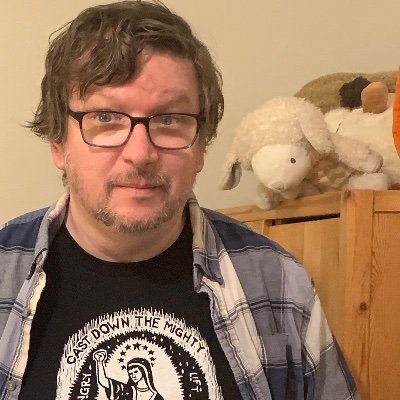
photo: Becket Logon
 Our Endless and Proper Work is my new book with Belt Publishing about starting (and sticking to) a productive writing practice.