The Beatrice Interview: Molly Jong-Fast (2000)

At 19, Miranda, the protagonist of Molly Jong-Fast’s debut novel, Normal Girl, is already being told by her acquaintances that she’s seen as a washed-up coke whore. As Jong-Fast explains below, some of the parallels between Miranda’s life and her own are intentional, but this privileged child of New York literati no longer has the appetite for destruction that fuels her protagonist’s drug-and-alcohol-induced downward spiral. A few months shy of her 22nd birthday, I meet her at a coffee shop in New York’s Upper East Side, where a nearby bookstore has copies of Normal Girl displayed prominently in its front windows. (Later, after we’ve chatted, we’ll head back to that same store so she can pick up a copy of Vanity Fair with an article about Robert Downey, Jr. we’ve discussed.)
Were you encouraged to write when you were growing up?
My parents always said that the worst thing you could do was be a writer. They encouraged me to read, which was
important, but I don’t think they encouraged me to write. I knew when I became a writer that you didn’t go into it for money, and you didn’t go into it for glory. You went into it because there was nothing else you could do.
I saw that even my mother, who’s very successful, went through struggles as a writer. She went through very hard publicity—and I know what that’s like now. I’ve had stuff written about me that’s very painful on a personal level. Especially when you’re only 21. It’s hard, it sucks. But I’ve put myself out there in the public, so I have to deal with whatever they say about me.
When did you realize there was nothing else for you to do?
There was no time where I really felt, “This is it, I’m going to be a writer.” There were different times when I felt like I wanted to be a writer… I’d been writing poetry for a number of years before that, maybe since I was 10 or 11. But I didn’t start to write the novel until I was 18.
How much of the hurtful publicity you have to face now is about people trying to make connections between
and Miranda?
I have news for you (laughs). That’s not hurtful publicity. It’s not great, but I have a much thicker skin than that. That’s nothing. I’m talking about people who write really mean stuff, like “The only reason she has a book deal is because her mother’s Erica Jong, because the book’s awful.”
People making a connection between me and Miranda? That’s fine. If people make connections between Miranda and Molly, they’re fooling themselves to some degree, but it doesn’t bother me. I wrote the book to play into that. It’s a social satire of the life of a child of privilege. It’s a big joke, a satire of myself. “Oh, wow, the daughter of a famous writer wrote a book.” This is a satire of the kind of book you would’ve thought it might have been, the tell-all memoir thing. And it’s a satire of the Less Than Zero type of book.
So how have you been handling the crush of publicity?
Sure, the publicity is draining, but you know what? Most young writers don’t get this many reviews. They don’t get this many interviews, or this many copies of the book printed. That’s all good stuff. So I can sit here and complain about mean customer reviews on Amazon.com, but the fact is that I’ve had advantages most young writers don’t get. So I shouldn’t even flinch. The publicity doesn’t make me who I am. I know who I am—I’m not a sound bite, I’m not my novel.
The book came out to fantastic reviews in England, to the point where I was wondering if we’d even read the same book. Molly Jong-Fast has more than lived up to the family name, that sort of thing. Then it came out here and I’ve had some really mean reviews and I start wondering if it’s really any good. But then when I read the book, I know that I’ve written something really interesting. And I’m really proud of it.
One of the challenges of doing a satire is to do it in a way that still makes readers care about Miranda as a character.
Sure. It’s very easy to feel bad for a starving Bosnian refugee child with one leg. If you don’t feel bad for that person, you’re evil. But it’s hard to feel bad for rich, good-looking people who destroy their lives on drugs. So, yes, it’s been a challenge. But it wouldn’t have been worth it if it wasn’t a challenge. What would the point be? If it hadn’t been hard, I’d have written something else, or not written anything at all.
Some of the best passages in the book are about Miranda’s time in rehab, which reflect some of your own experiences.
I met people who had incredibly sad lives, much sadder than my life ever was. I met a 19 year-old who’d been to 19 different rehabs and couldn’t put a day together without heroin. That was the kind of stuff… I was more interested in writing about that than anything else. I really wanted to say something about the sadness of rehab, to say something for those people.
I always thought that what happened to you in rehab was that you went and you got cured. And then you were fine, and you could have the occasional vodka martini and everything was fine. I didn’t understand like I do now that you don’t get cured, and once you get to a certain point there’s no going back. Abstinence is the only way you can then get your shit together.
I felt bad about having been born with the advantages I had, and I thought maybe if I hated myself for them, that would make up for the inequality. That’s why I almost killed myself with booze, beyond being an alcoholic—I felt bad about all the privilege I’d gotten with no reason to get it except birth. I couldn’t explain that part of the universe to myself.
Another part of it was that I was… I knew people didn’t like the advantages I had, so I didn’t like myself with them. I felt bad, I wanted to be liked, I took it all very seriously. And now that I’ve written the novel, and published it, I think I’ve become less apologetic for myself. I’m still self-deprecating. I still do amusingly stupid things on a regular basis, but I don’t feel as much like I have to die for them.
You have a core of self-worth now.
…which I didn’t have then, right. And I don’t even think I had it when I was writing the novel, either. It’s a recent thing, but it changes everything. It used to be that if somebody would, for example, say something bad about my mom, I’d keep quiet or I’d play along. I don’t do that anymore; I understand that it’s okay to have respect for myself and for my family.
I’ve been abstinent for three years this November. That’s the biggest accomplishment in my life. The other stuff doesn’t mean as much when you consider that I’ve gotten to lead two lives in one lifetime. As much as I love what’s happening now, in the larger scheme of my life, maintaining my abstinence is more important.
And, it sounds like, the core from which everything else emerges.
Absolutely. To know me back then was to not like me. I was a mess. It wasn’t so much from the drugs, necessarily, but you could talk to me and see that I was ready to fall apart at any moment, at really inappropriate times. I didn’t know how to handle myself.
And now you do.
I just got out of puberty. I’m okay, but I’m not the bastion of security. It’d be one thing if I was 30, married, had a kid, had an identity. But I’m 21, single, and live in my parents’ building. It’s not like I got my shit completely together. I do in some ways, but I had to fly out to San Francisco to do a reading, and I was in the airport lounge, crying on the phone, “Mommy, I don’t want to go.” And she was like, “I love you, now get on the plane.”
OK, last question. Who are some of your favorite writers?
I think of them in tiers. F. Scott Fitzgerald and Nabakov are at the very top. That’s the style I really like. I was just rereading The Great Gatsby for like the 1500th time, just reading every paragraph really slowly. I just want to kill myself, it’s so good; there’s no way I’ll ever get there.
And then I really like Jay McInerney and Bret Easton Ellis and Tama Jamowitz, but I really think of them together, as a genre. And then I love Donna Tartt. And Truman Capote and Dorothy Parker, but they’re both separate from the others. What else do I like? I like some pretty conventional stuff. I wouldn’t put Anne Rice in the same category as Nabakov, but I think she’s a very interesting writer.
I live for David Sedaris. His books are so fantastic and wonderful and brilliant. And I loved Robert Bingham’s collection of short stories, Pure Slaughter Value. I read it at least five times.
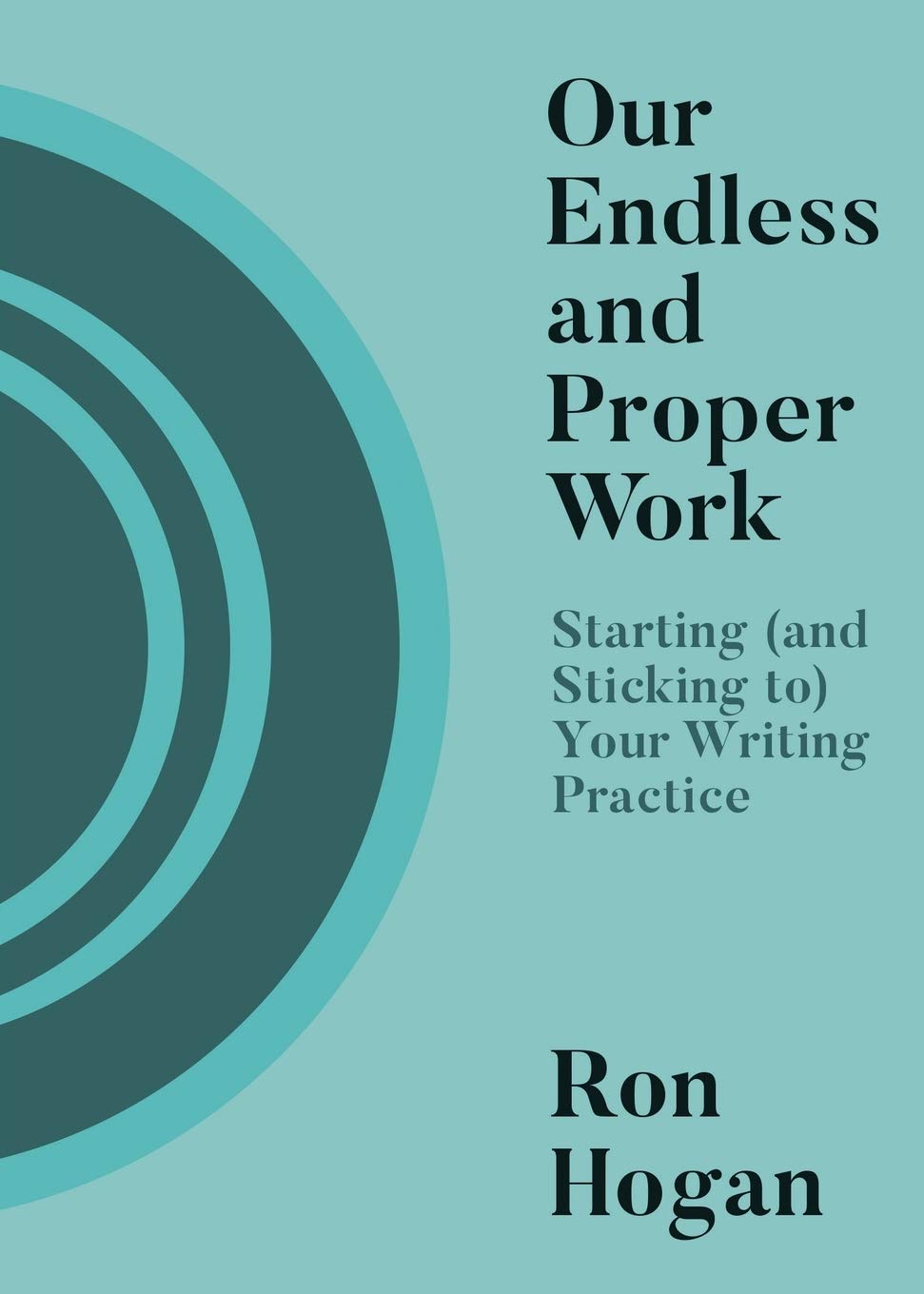 Our Endless and Proper Work is my new book with Belt Publishing about starting (and sticking to) a productive writing practice.