The Beatrice Interview: Gavin Lambert (1997)
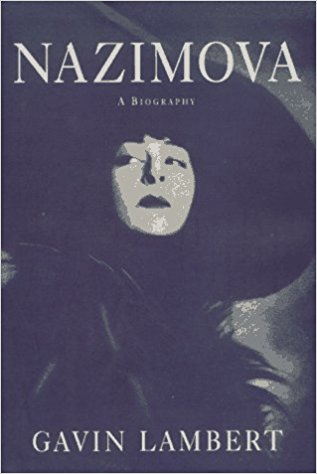
Gavin Lambert is the author of the classic Hollywood insider novel Inside Daisy Clover, first published in 1963, as well as the screenplay of its 1965 adaptation starring Natalie Wood and Robert Redford. He’s also an accomplished biographer who’s written about George Cukor and Norma Shearer. In his most recent project, Lambert presents the first full-scale biography of Alla Nazimova, one of silent film’s greatest stars and one of early Hollywood’s most controversial personalities, a woman who maintained unprecedented control over her productions and lived a lifestyle as sexually flamboyant as she could get away with (she was the first of the great “Hollywood lesbians,” all the while maintaining a fictitious marriage with her business partner, Charles Bryant). The Garden of Allah, the hotel where many of Hollywood’s greats took up residence, was originally the Garden of Alla, a spacious mansion all her own at the start of what would become the Sunset Strip. I met Lambert at a coffeeshop not far from the Garden’s former location (now occupied by one of the thousands of mini-malls found at nearly every LA intersection) to discuss the legendary actress.
What led you to write about Alla Nazimova?
Victoria A. Nelson, my editor at Knopf asked if I’d be interested in writing a life of Nazimova, and I said, “I’m sure she’s fascinating, but does anybody really know anything about her?” I’d heard rumors about her, but not enough to base a full-scale life on. Victoria told me there was an archive of her papers in, of all places, Columbus, Georgia. I went to look and was totally fascinated. Without that material, particularly Nazimova’s memoirs I simply could not have written this book.
The archive’s existence immediately brings up what for me is one of the most fascinating aspects of her story, in that it was maintained by Glesca Marshall, her longtime companion. And
because Glesca was closeted, it’s simultaneously a celebration of Nazimova’s life and a major case of spin doctoring.
Absolutely. That was one of the biggest problems I had in writing the book, finding out what was true and what was cover-up. That involved quite a bit of work, as you can imagine, digging around and talking to people. I was amazed at how many people were still alive who had knew her or had worked with her, considering that she had died in 1945 at the age of sixty-six. There were about twenty or twenty-five people who’d worked with her on stage or in films, or who had seen her act in some of the famous things, like Ghosts. And then there was this fascinating 100 year-old lady who’d seen everybody from Eleonora Duse to Nazimova to Eva Le Gallienne and could compare them all as actresses.
Nazimova’s stage career is amazing, not only in terms of her individual performances, but the lasting influence it had on American theatre.
This is the woman who inspired Tennessee Williams and Eugene O’Neill to write plays. And she was offered plays by other writers, too, including Noel Coward and Clifford Odets. And she was in the background of the Russian theatre before that. I found out that she had exaggerated her importance to the Moscow Arts Theatre; she was an apprentice who had a few walk-ons. But she was there at the start. She watched Stanislavsky rehearsh and learned a lot from it. She really led an epic life—from Moscow to New York, the Broadway of the ’20s, to Hollywood.
Her transition from Broadway to Hollywood is interesting in that for all her success, there were also several missed opportunities.
She realized later in life that her whole silent film career had been a great mistake. She was typecast as a foreign vamp, and the problem was that she was so good at it, so popular, that she came to believe in it. She fell for her own image, aided and abetted by her dreadful pseudo-husband, Charles Bryant.
She also accumulated a lot of power behind the scenes.
That’s amazing, and one of the reasons why the establishment started to hate her and insist that she had to be taken out. No other woman had produced, directed, written and starred in her own movies and been successful. She was too much ahead of her time for the people here then. But she also cut herself off from many talented people, directors like von Stroheim and Vidor, who in any event might have been deterred by the stories about her: that she was impossible to work with, that she demanded total control and so on. Had she not missed opportunities like that, she might have been as extraordinary in silent film as she had been in theatre, even revolutionary. Instead she settled for the image of success.
The amazing thing is that, after she was washed up in Hollywood, she went back to Broadway and had a series of successes as great as her first run in theatre. When she did The Cherry Orchard, Mourning Becomes Electra, A Month in the Country, and Ghosts, all within five years… When she went back to the stage, though, she made an effort to be more cooperative. The only trouble she had during that period, from 1928 to about the late ’30s, was that for an actress of her age (because she was in her fifties by then) with a slight foreign accent, the parts were limited. Her roles either had to be classics, or something special like Mourning Becomes Electra, in which O’Neill wrote around her accent. Her accent was actually quite charming, really, and no heavier than, say, Garbo’s, but then Garbo had problems in movies as well.
And then, at the height of her success in Ghosts, she had the breast cancer and the mastectomy. That was a very serious blow to her in every way. Traumatic to begin with, and doubly so when it happens just as you’re back on the crest of the wave and the doctor says you can’t work for at least a year. It’s amazing that she did as much as she did given the mistakes that she made and the bad luck that she had, but even after all that she managed to get back to Hollywood for some last roles onscreen.
And for a while, although she was discreet, she was also fairly matter-of-fact about her sexuality.
Only until she realized that she’d taken it too far. She’d put out all these teasers when she was a silent movie star, saying things like, “Some of my friends call me Peter and some call me Mimi,” but it was used against her when the films started not to make money. She became not only a failed artist but a dyke who had to be kicked out before she created a scandal that made the industry look bad.
Let’s talk about one of Nazimova’s most famous lovers, Mercedes de Acosta.
Mercedes de Acosta was the greatest starfucker ever, very stylish and unmistakably lesbian. She had affairs with Isadora Duncan, Marlene Dietrich, and Greta Garbo. But before that, when she was twenty-two, she saw Nazimova on stage and was determined to meet her, so she went to Nazimova’s dressing room after a performance at Madison Square Garden and there was an obvious instant click between the two. De Acosta eventually wrote an autobiography in the ’60s called Here Lies the Heart (“and lies and lies,” one of her friends quipped), in which she names names, although she talks about what they did in coded terms. Earlier drafts among her unpublished papers go into more detail about the weeks that she and Nazimova spent together after that initial meeting.
In the second half of the book, when you’re recounting some of the legendary rumors about Nazimova’s Hollywood sex life, I was intrigued that many of those stories come from the director George Cukor.
Well, he was the great source. He was extraordinary. He knew everybody, really, and had known Nazimova since the late 1920s. George was always incredibly discreet about people who were living, but in his later years, if he knew you well, he would talk to you about anybody who was not still around. I believed him because I knew that George was a first-rate gossip and his stuff was really good. He didn’t tell the sort of rumors that Kenneth Anger would give you; he had the real thing.
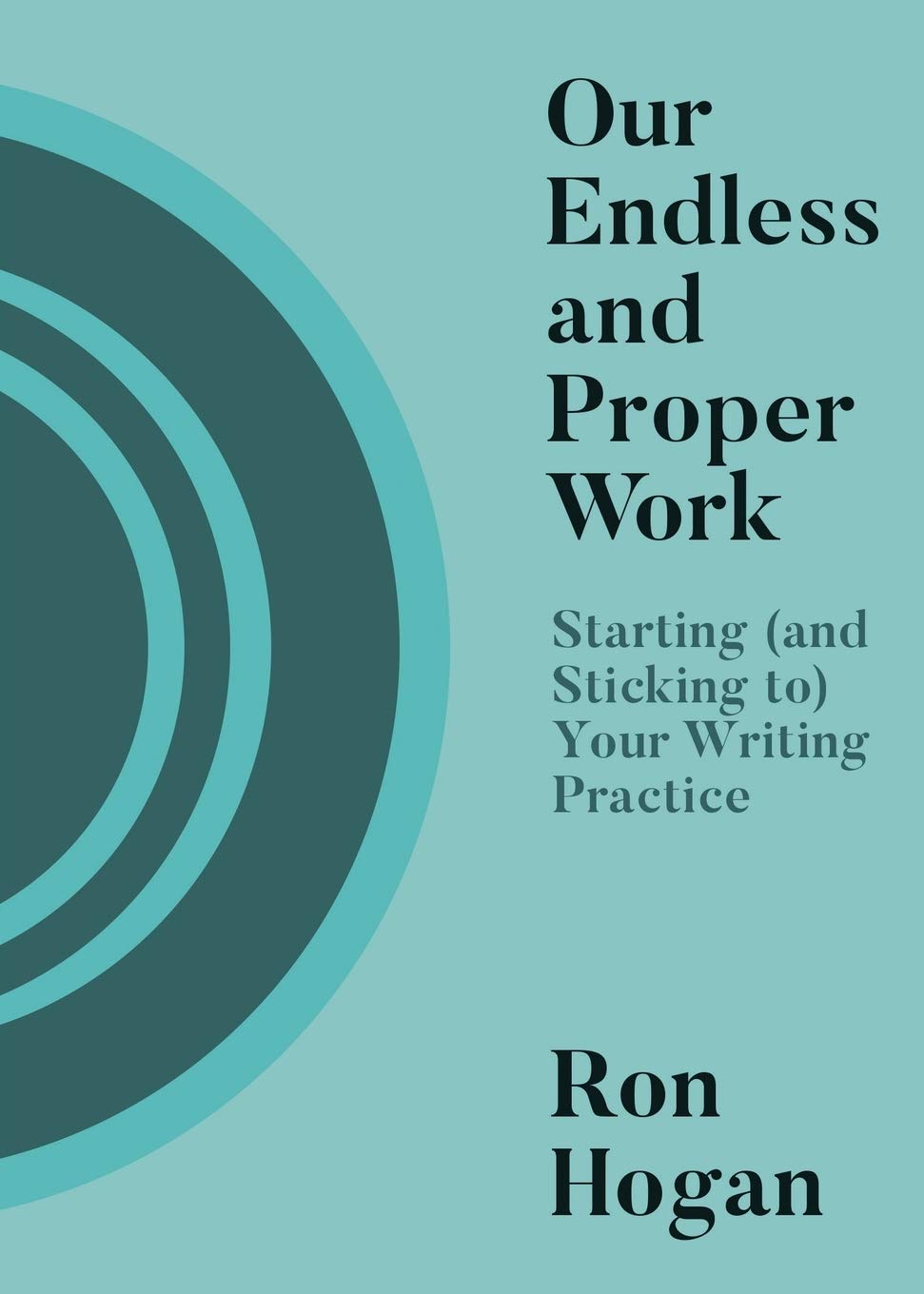 Our Endless and Proper Work is my new book with Belt Publishing about starting (and sticking to) a productive writing practice.