The Beatrice Interview: Bharati Mukherjee (1997)
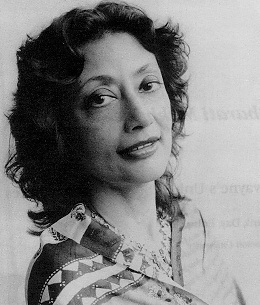
Devi Dee, the self-rechristened protagonist of Bharati Mukherjee’s Leave It To Me, isn’t happy. Abandoned by her American mother and Eurasian father in an Indian orphanage in the late ’60s, she was adopted by a New York family and grew up as Debbie DiMartino. Now she’s 23 and wants to track down her biological mother—but the last thing on her mind is a heartwarming family reunion. Her quest leads her to San Francisco, a city that Mukherjee, who was born and raised in Calcutta but has lived in America for over thirty years, knows extremely well. Her knowledge of the city and the precarious mental and moral states of some of its inhabitants makes itself known in every tightly wound sentence of this novel, while her dark, sarcastic sense of humor manages to peep through even as the body count begins to climb.
What’s it like to spend so much time writing about a protagonist who’s basically unlikable, even reprehensible?
I kind of like her, actually.
There are things that I like about her, but she’s not what I’d call endearing or sympathetic.
I hope she’s sympathetic. She’s tough and vulnerable. I don’t have any control over my characters. At any given time, there are scores of characters yelling at each other, yelling at me, inside my head. Some of them sort of take over, and I become totally intrigued or mesmerized by them. Devi came to me as the opposite of a character I’d written earlier, Jasmine from the novel Jasmine. Draft by draft, I came to understand Devi better, and the most important idea that wrote itself in the second or third draft was that she prizes clarity over everything else.
What she understands, in retrospect, is that there’s a huge difference between vengeance and justice. Once that idea was articulated by my character, I realized that in order to make my concept of divine justice, which sometimes involves great violence, understandable to the reader, I’d have to dig into and share the Hindu mythology of the goddess Devi worshipped in Bengal, who was created by the Cosmic Spirit to do battle with the baddest bad ass of all the demons, the Buffalo Demon, and is therefore quite violent.
I never saw my character Devi’s tale as optimistic. Here’s a street smart, savvy, manipulative young woman, enraged about the fact that she was thrown out like a garbage sack on the hippie trail, who’s part of a larger design in which some higher power uses her to restore some kind of balance and purge evil out of our California. I never saw her as a mean person, more as a person capable of redemption after she’s gone through some of the violence within herself.
So as you were writing the novel, it wasn’t necessarily that much of a surprise when she burns down her ex-lover’s house at the end of Part One? That’s the point for me where I stopped seeing her as a sarcastic but sweet character and started seeing her as being capable of just about anything.
I knew she was going to burn down the house in the early drafts, but I didn’t know what would happen as a result, other than that there was no turning back for her. The final ending of the book was what came as a total surprise to me.
Earlier drafts didn’t lead to that final confrontation?
I don’t look at my early drafts in hard copy. I just open another file in my word processor and start from scratch. Each draft helps me know my characters better; draft by draft, their voices get louder and they tell me their adventures more fully each time through. The characters thicken, becoming more dense and complex. I hear the sentences better. I do a lot of drafts. In order to get these very dense, high-energy sentences, I’ve thought through much bulkier paragraphs.
One of the things this novel is about is coming to grips with the legacy of the ’60s. The former hippies have put aside the consequences of their actions; Devi, as the instrument we’ve discussed, represents those consequences coming back to them and forcing the issue.
As a professor and workshop leader, I’m constantly working with young people for whom Vietnam, the Kennedy
assassination, and so on mean nothing. They’re simply statistics. But Devi’s generation is still a victim of those events, they’re formed by post-Vietnam America. I’ve come to realize that one of the themes throughout my fiction is the changes in the way America thinks of itself and is seen by the rest of the world as a result of Vietnam. My sympathies are very much with people like the character “Loco Larry,” people I see around my neighborhood who were damaged by the war. The peace protestors were noble—and both I and my husband were involved with rallies and vigils at the time—but the peace movement also masked a certain excessive narcissism. People were doing good, but at the same time they were self-indulgently satisfying their sensual and sexual appetites, and many of them never acknowledged the fallout from that kind of narcissism, how it affected the people around them. Many of the people who went to India looking to escape Western civilization misunderstood and misapplied Indian traditions, and succumbed to the imperializing impulse. They thought that their version of India was the way India really was, without understanding Indian culture.
What separates you from other Indian fiction writers?
I think my work from Darkness onward, so from about 1985 to the present, is hard for some readers to understand because I don’t fit into any easy slots. I’m a woman who was born in Calcutta, but I’ve lived in America my entire adult life and consider myself an American. My literary soul was formed by literature from around the world, but especially American literature. I’m an American writer of Indian origin. I’m not doing an exotic ghetto, National Geographic Indian number, and I’m not making readers feel good about those locales—aren’t we quaint, aren’t we sweet, aren’t we sentimental and emotionally expressive. I’m showing white Americans their world in a different way, so they’ll never be able to walk down their own streets quite the same way after reading my books.
Who do you read for pleasure?
I read many different kinds of authors. I love James Ellroy’s books. He has qualities that I strive for in my work,
particularly an edgy humor combined with a dark vision of society, as well as incredible energy in every one of his sentences. It must seem very strange that a very demure Indian lady sees James Ellroy as a kindred literary spirit, but there you are.
How much do you keep up with modern Indian literature?
With Indian literature in English and Bengali, as much as possible. I go to India every year to see my family and during those trips, I empty out bookstores getting the latest books. But there are so many languages in India, so many regional literatures with prolific writers that I can’t claim to know all of Indian literature, or even all of that from the languages I know.
But you know enough of it to know that American readers are only getting the tip of the iceberg, as it were.
Absolutely. The only writers of Indian origin that American writers know are the ones who happen to be credentialized by magazines like the New Yorker and, of course, published in America. Very often, the writers who are picked up and given that attention by the American publishing industry are minority writers who are expatriates. They’ve lived outside India for much of their lives, and Indian writers in India don’t necessarily see any affinity with them. It’s sad to me that Americans aren’t as interested in reading translations of some of these Indian writers. We don’t see many translations from non-Western languages being made available to us.
Do you usually spend a lot of time on the research and draft phases of your work?
It depends on the book. Once the character comes to me, I know what kind of material will be essential, what I’ll need to know. My last novel, The Holder of the World, made much use of virtual reality. And as with Devi’s job as a media escort, the narrator of that novel had a very 90s profession; she was an asset hunter, tracking down people’s financial holdings. But the novel was also about seventeenth-century Massachusetts and various trading companies that established themselves in seventeenth-century India, which meant eleven years of uncontrolled and immensely pleasurable research. I love history as story, and the details of customs, manners, and social structures, the way that people thought and behaved.
Media escorts and asset hunters are both facets of contemporary culture that perhaps only an outsider perspective would notice, although you don’t necessarily have to be a foreign-born author to do it.
A writer, in order to be at her or his sensitive and most receptive, has to be both an insider and an outsider. My quarrel with certain writers who see themselves only as expatriate Indians writing about India from outside is that they’re too far out. To write about something, I need to both know it well and look at it from an odd angle. I don’t want to be sneer at or satirize my characters, just to look at them differently.
That gives you the insight to see them behaving not as examples of a satirical point, but out of sincerely felt motivations and interests.
Exactly. That’s where I feel I’m very different from, say, V. S. Naipaul, who all too often in my opinion sets himself above the cultures he depicts, adopting a patronizing or snide tone. Coming back to your initial question, that’s why I don’t see Devi as an unlikable or unsympathetic character. I can’t write unless I’ve come to love a character for all his or her wickedness or flaws.
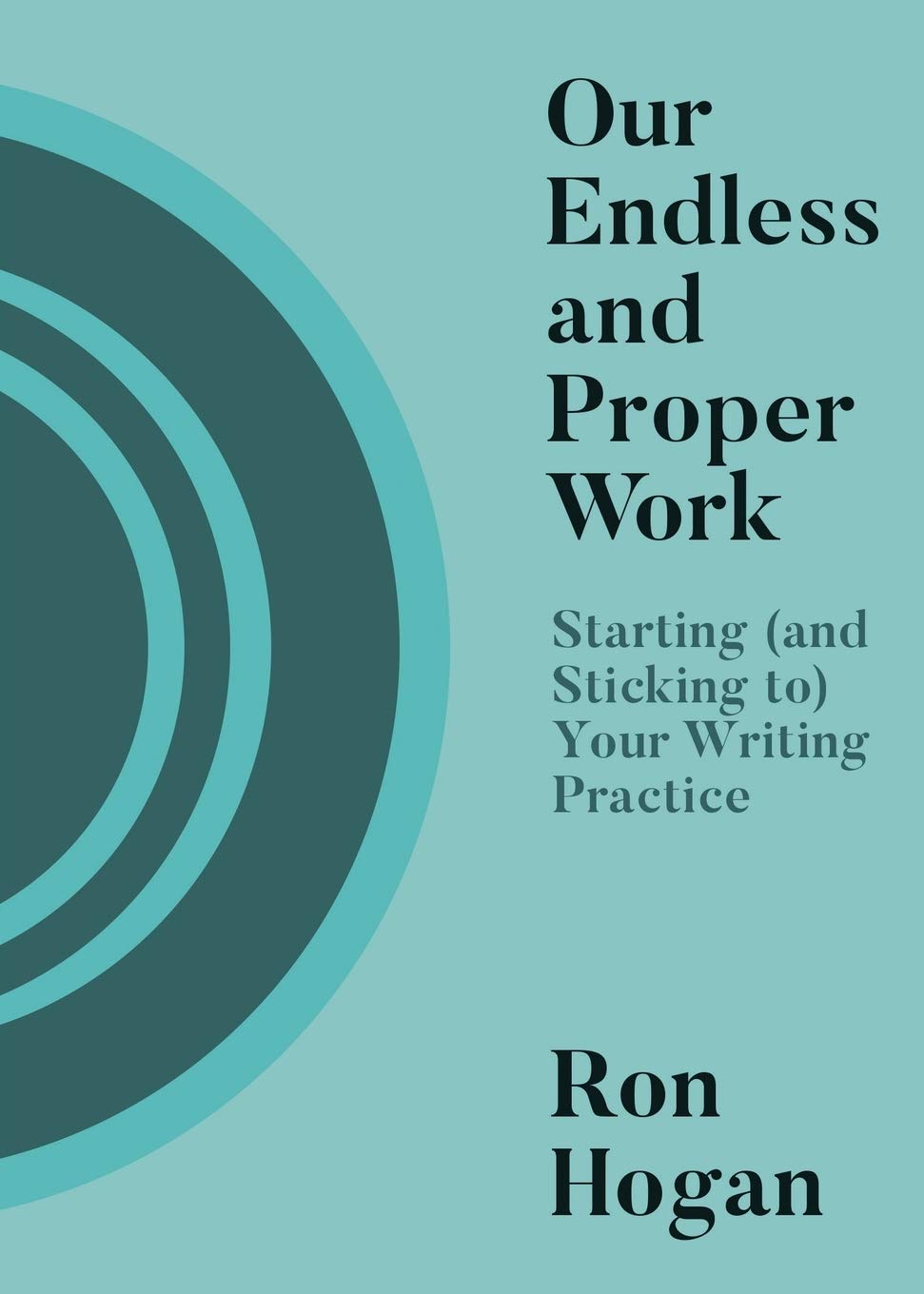 Our Endless and Proper Work is my new book with Belt Publishing about starting (and sticking to) a productive writing practice.