The Beatrice Interview: Thaisa Frank (1997)
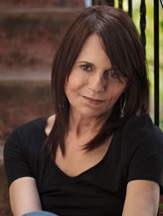
Thaisa Frank is a psychotherapist and psychic reader who also writes amazing short stories. In The New York Times Book Review, William Ferguson raves that her work “could be said to occupy the shadowy land between poetry and prose—at times strong in narrative, more often fantastic, transfixed by the possibilities of metaphor.” She frequently teaches writing, and is the co-author with Dorothy Wall of Finding Your Writer’s Voice.
RH: How does a short story start for you?
TF: Well, I’m not a character-driven writer. I’m not catalyzed by character and I’m not catalyzed by plot. A story starts for me by phrase, by title, by an idea, or by an inchoate sense of the scene. Most of my short stories are written over a period of time. When I started writing, I didn’t think of myself as writing stories. I was producing scraps of paper that would sit on my desk for a year. Now I have faith that most of those scraps will become stories.
RH: Your stories have striking imagery that stayed with me long after I put the book down. It seems as if there’s an almost poetic sensibility at work.
TF: I’ve written fiction since I was eight. I abandoned it because both my parents were wannabe writers who were also jealous and competitive, and because there were family secrets that couldn’t be told. When I came back to writing, I started with poetry, and I still do write it, although it’s kind of my secret.
RH: The language you use is somewhat poetic as well.
TF: I usually hear my stories, and when I revise, I can hear what’s wrong as I read them. I don’t bother explaining to myself what’s wrong, I just know. It’s a little like composing music.
RH: Do you read your stories aloud to yourself?
TF: Yes. I don’t really need to, but it’s a good idea and I advise my writing students to do it. I literally can hear my stories the way that you read a musical score. That’s probably why voice is my first concern when I teach writing. Voice is a very scary thing for writers, because it has to do with vision. It’s who you are when you express yourself artistically, and it means not copying anybody. Most writers first try to fit into the establishment by living up to the generic idea of a storyist. Particularly in America, where free speech leads to a multitude of expressions of the trivial; being able to say anything you want is a great way to inspire people to say nothing. Lots of the best writing comes from countries where personal expression is restricted, because it forces writers to find different ways to express themselves. Language is precious and costly.
Most writing is taught formulaically: the Writer’s Digest model, “list 25 things about your character”. When I teach, I always teach voice first. It’s not just a question of the specific musical notes in a piece, it’s about the composer’s involvement in the work. When you find your voice, you create the stories only you could have written.
RH: Is your voice particuarly suited to shorter forms, or do you want to write novels eventually?
TF: I’ll never stop writing short stories, but I actually have written a novel, a novel about cyberspace that I was commissioned to write, which I’m revising right now. And I’m working on another one. I see myself doing both.
My stories, from my first collection, Desire, to this book, have gradually been getting longer, and each of the Black Sparrow collections includes a novella consisting of interconnected stories. My voice seems to have been able to sustain itself for greater lengths the more I’ve written.
I think what distinguishes people who write short stories from many novelists is a different sense of time. The novelist believes more in cause and effect. Epics, the slow culmination of events, make sense to the novelist. Short story writers tend to believe in epiphanic moments. There’s a place for both beliefs, but I’m suspicious of causuality and I believe in the epiphanic moment.
RH: One aspect of the epiphanic moments in several of your stories I want to discuss is their ambiguity. In some cases, the exact same story could appear in either a fantasy or science fiction magazine or a mainstream literary magazine and fit in perfectly.
TF: I’d say that it’s surrealism, which is different from fantasy and science fiction. Surrealism presents the reader with extraordinary events that occur in an ordinary world. Science fiction usually involves extraordinary events in an extraordinary world that provides a causal explanation for those events.
RH: There’s a triptych of stories in Sleeping in Velvet about cyberspace, and it strikes me that cyberspace itself is a very surrealist environment.
TF: It is. You don’t meet people in cyberspace; they create characters, they invent the world as they go along. For many people, it can feel like an alternate reality.
RH: How long have you been online?
TF: I started on the Well in 1990, and I started hosting the Writers conference shortly after I came on. I think doing the conference attuned me to the creation of a community in the ether, one where people don’t have bodies, where time is a flexible fourth dimension, and where voice is extremely important. You have to become aware of how your posts are seen by the reader to thrive in that community.
RH: Do you see any connection between your surrealist sensibility and your psychic abilities, in terms of seeing the world differently than other people?
TF: That’s interesting; I’ve never thought about that before. I don’t know very many psychic readers who are also writers, so I just don’t know. I think maybe my psychic background turns up more in the way I see relationships between characters, the way I see people together. If a character doesn’t feel embodied to me, they don’t feel real…and it’s not about knowing the color of their eyes, it’s a deep sense of how they move in time and space. But I’d have to think about whether there’s a deeper connection between that and the surreal. Maybe surrealism is a slightly more flamboyant expression of the imagination that all writers possess.
RH: Black Sparrow Press has done a really wonderful job with this book. It’s a very beautiful physical object. And this is the second book you’ve published with them.
TF: I adore Black Sparrow. It’s very hard to get John Martin, the publisher, to accept new writers; he prefers to publish editions of older writers like Wyndham Lewis. There are two big advantages to publishing with him. He always keeps your books in print, and if he believes in your work, there’s a literary freedom almost nobody else provides. I can write almost anything, and John rarely edits.
RH: I noticed that both books feature epigrams from Yeats.
TF: I noticed that, too, although it wasn’t a conscious decision. Wallace Stevens is my very favorite poet, but I think Yeats talks about passions in a way that’s more soulful for me. And when I was studying writing, I studied him because I was interested in meter and rhyme, in breaking down the elements of writing. He got under my skin at a time when I wasreally beginning to think that writing had to be my career.
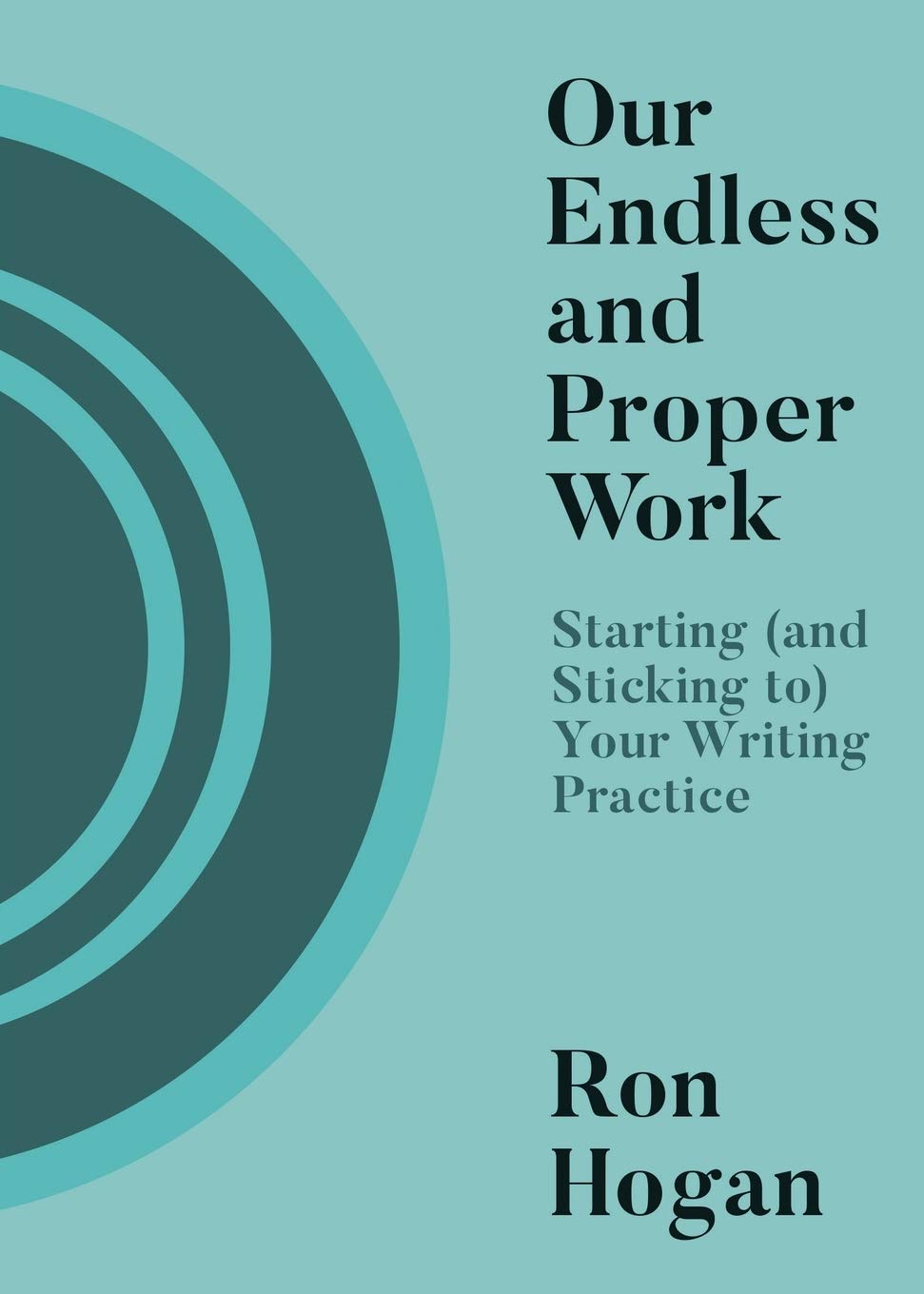 Our Endless and Proper Work is my new book with Belt Publishing about starting (and sticking to) a productive writing practice.